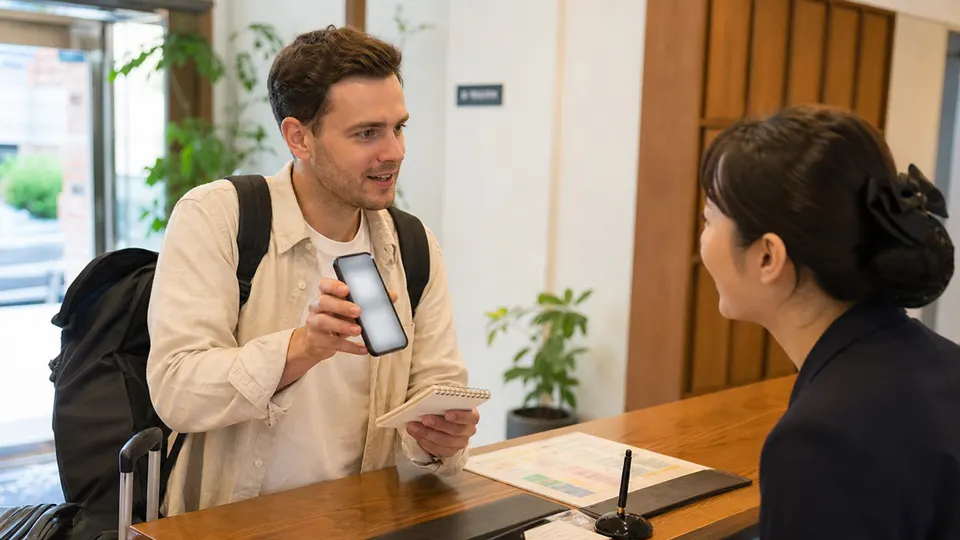
Bringing reference photos
A few honest, well-lit photos of your current concern -- taken from a couple of angles in natural light -- give a provider far more to work with than a verbal description alone, and reference photos of a look or result you like (not necessarily of another person's face, but even example angles or textures) help communicate a goal that can be hard to put into words. Save these to your phone before your appointment rather than trying to find them on the spot.
Writing your questions down in advance
Consultations move quickly, especially when a language gap adds translation time on top of the usual back-and-forth, so having your questions written out in advance -- on paper or in your phone -- means you're less likely to leave with something unanswered. This is especially useful for practical logistics questions (total cost, number of sessions, downtime, flight timing) that are easy to forget to ask in the moment.
Translation options during your visit
- Many clinics with international patient programs have English-speaking staff or an in-house coordinator -- ask when booking whether this is available.
- Translation apps with a conversation mode can bridge gaps for more nuanced medical questions, and it's worth having one downloaded and tested before your appointment.
- Some clinics offer or can arrange a professional medical interpreter for a fee, which is worth asking about for a more involved procedure.
- Confirm in writing (not just verbally) anything important discussed through translation, since details can get lost even with a good interpreter.
It also helps to write down, in your own words, what specifically prompted you to seek this treatment now -- a provider genuinely benefits from understanding your goal in your own language before translation, since it shapes how they frame their recommendation rather than just executing a generic version of the request.
Official sources
Time-sensitive details were checked against the original sources below on 2026-08-28.