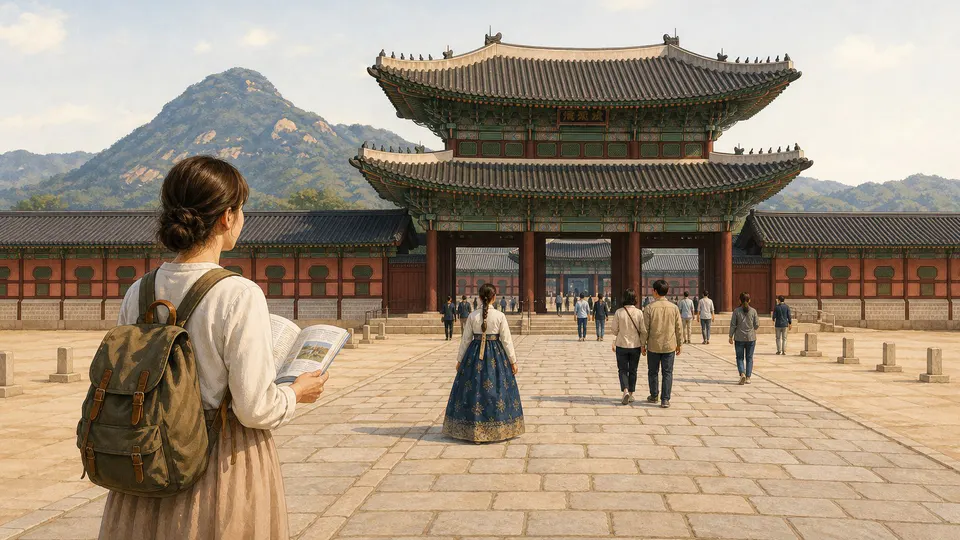
The historical significance of Incheon's Open Port district
This area preserves a significant layer of Korea's modern history, reflecting the period when Incheon's port opened to substantial foreign trade and influence, and its surviving architecture from this era offers a tangible, walkable window into this pivotal chapter of the country's development.
Walking through the preserved historic streets
Strolling past the district's colonial-era and early modern architecture gives visitors genuine historical context beyond a museum exhibit, with many buildings' facades and structures still reflecting their original early 20th century character.
Settling into a retro wooden cafe
A number of cafes throughout the district embrace this historical wooden architectural style, whether through genuine restoration or deliberate retro design, offering a fitting, atmospheric place to pause and reflect on the surrounding history during your walk.
Combining this district with a broader Incheon day trip
Given its close proximity to Incheon Chinatown and Songwol-dong Fairy Tale Village, pairing a walk through the Open Port historic district with these neighboring attractions creates a well-rounded day trip spanning history, food, and lighter cultural fun.
Useful Korean
Frequently asked questions
What historical period does the Open Port district specifically preserve?
This district's architecture largely reflects Korea's modern history period around the late 19th and early 20th centuries, when Incheon's port opened to significant foreign trade and influence, and many surviving buildings from this era have been preserved or restored to reflect this specific historical layer.
Are the retro wooden cafes housed in genuinely historic buildings, or newly built to look historic?
This varies by specific cafe, with some genuinely occupying restored historic buildings from the era while others are newer constructions deliberately designed in a matching retro architectural style, so researching a specific cafe's actual building history if authenticity matters to you is worthwhile.
Is this district within walking distance of Incheon Chinatown?
Yes, the Open Port historic district sits close to Incheon Chinatown, making it easy to combine both into a single, history-focused Incheon day trip alongside the neighboring Songwol-dong Fairy Tale Village if you want a fuller day of exploration.
Official sources
Time-sensitive details were checked against the original sources below on 2026-08-28.