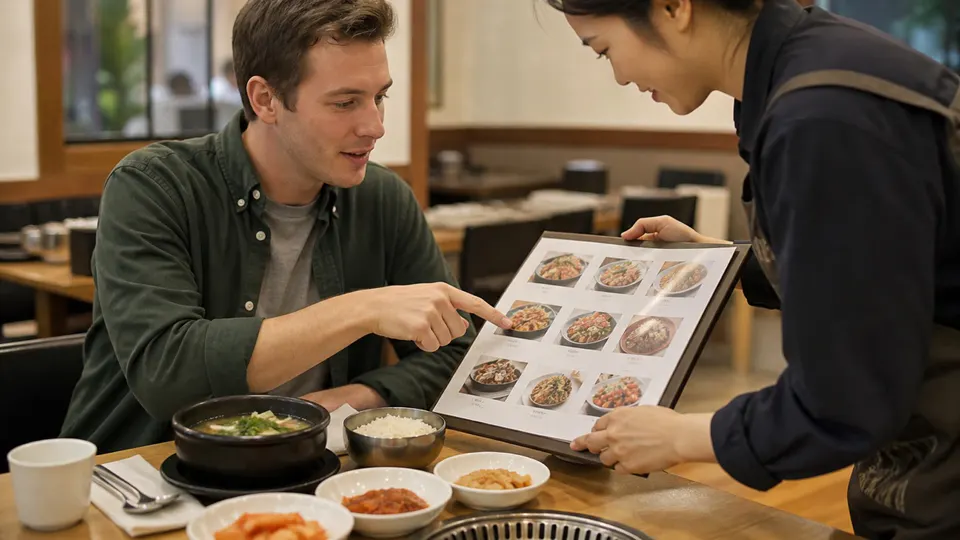
Jokbal vs bossam, the difference
Jokbal is pork trotter (pig's feet) slow-boiled with soy sauce, ginger and spices until tender, sliced and served with the skin still on for its distinctive gelatinous texture. Bossam is boiled pork belly or shoulder, sliced into thicker pieces without the trotter-specific texture, generally considered a bit more approachable for diners unfamiliar with trotter cuts. Both are traditionally served with a spread of wrapping vegetables and side dishes rather than eaten plain.
Building a proper lettuce wrap
- Take a leaf of lettuce or perilla leaf flat in your palm.
- Add a slice of the pork, a small dab of ssamjang (fermented soybean-chili paste), and optionally a piece of garlic or a slice of raw chili.
- Many restaurants also offer a side of fermented, salted baby shrimp (saeujeot) as an alternative dip -- traditionally paired specifically with jokbal.
- Fold the leaf around the filling and eat in one bite rather than nibbling, which is the traditional way to enjoy the full flavor combination at once.
The makguksu noodle pairing
Many jokbal and bossam restaurants, particularly in the Bupyeong and Jokbal Alley areas known for the dish, also serve makguksu -- cold buckwheat noodles in a tangy, slightly spicy sauce -- as a traditional side dish or light second course to balance the richness of the pork. Ordering a small makguksu alongside a pork platter is a common, well-regarded combination rather than an unusual request.
Both jokbal and bossam are typically ordered as a shared centerpiece dish for the table rather than as an individual portion, so groups of two or more get the best value and variety. The accompanying side dishes -- raw garlic, ssamjang, kimchi, and pickled radish -- are meant to be combined freely inside each lettuce wrap according to personal taste, with no fixed correct combination. Restaurants specializing in either dish often serve makguksu noodles at the end of the meal as a lighter closing course, worth saving room for.
Official sources
Time-sensitive details were checked against the original sources below on 2026-08-28.