Key Takeaways
- Use a pharmacy first whenever possible. A Korean pharmacist can ask about symptoms and recommend an appropriate non-prescription product.
- Convenience stores carry only a restricted emergency selection. They are useful after hours but do not replace a pharmacy or medical consultation.
- Call 119 for an emergency. Public ambulance dispatch and transport do not carry an ambulance fee, but hospital examination and treatment are billed separately.
Active-Ingredient Decoder: What to Ask the Pharmacist
A foreign brand and a Korean product are not automatically interchangeable. Match the active ingredient, strength, dosage form and combination ingredients, then let the pharmacist screen for contraindications and interactions.
| Overseas label you may recognize | Ingredient to discuss | Safety question to ask |
|---|---|---|
| Tylenol / paracetamol products | Acetaminophen (paracetamol) | Does any cold or flu medicine I already took contain the same ingredient? |
| Advil / Motrin-type products | Ibuprofen or another NSAID | Is this suitable with my ulcer, kidney, heart, asthma, pregnancy or blood-thinner history? |
| Zyrtec / Claritin-type products | Cetirizine or loratadine | Can it cause drowsiness, and does it duplicate another antihistamine? |
| Indigestion or heartburn products | Varies: antacid, alginate or digestive-enzyme combinations | Which symptom is this product intended for, and can it affect my prescriptions? |
| Wound ointment | Varies by product; do not assume every cream is an antibiotic | Does this wound need cleaning, dressing, a prescription or medical examination instead? |
Where to Get Medicine in Korea
| Option | Use it for | What to expect | Important limitation |
|---|---|---|---|
| Pharmacy 약국 (yak-guk) |
Cold symptoms, sore throat, stomach trouble, fever, allergies, pain, minor wounds, and medication questions | A pharmacist asks about symptoms and recommends an OTC product or advises you to visit a clinic | Opening hours vary; many neighborhood pharmacies close at night or on holidays |
| Convenience store CU, GS25, 7-Eleven, Emart24 |
Limited designated emergency medicines when pharmacies are closed | Selected acetaminophen products, cold remedies, digestive medicines, and pain-relief patches may be stocked | Not every branch sells every product; staff cannot provide the same clinical consultation as a pharmacist |
| Clinic 의원 / 내과 |
Symptoms needing examination, prescription medicine, antibiotics, worsening illness, or persistent fever | A doctor examines you and issues a prescription when medically appropriate | Consultation, testing, and medicine are billed separately |
Look for a sign displaying 약 or 약국. Search NAVER Map or KakaoMap for 약국, then use the “open now” information cautiously because holiday hours can change.
Convenience-Store Emergency Medicines
Participating convenience stores may sell designated safe emergency medicines (안전상비의약품). Common examples can include selected Tylenol acetaminophen products, Pancold-A cold medicine, Festal digestive medicine, and external pain-relief patches.
- Check the active ingredient: do not take two products containing acetaminophen at the same time.
- Read the exact package: dosage and age restrictions differ by formulation.
- Avoid alcohol: alcohol can worsen drowsiness, stomach irritation, and medication-related risks.
- Ask before combining medicines: visit a pharmacist if you take prescriptions, are pregnant, have chronic conditions, or have drug allergies.
How to Buy Medicine at a Korean Pharmacy
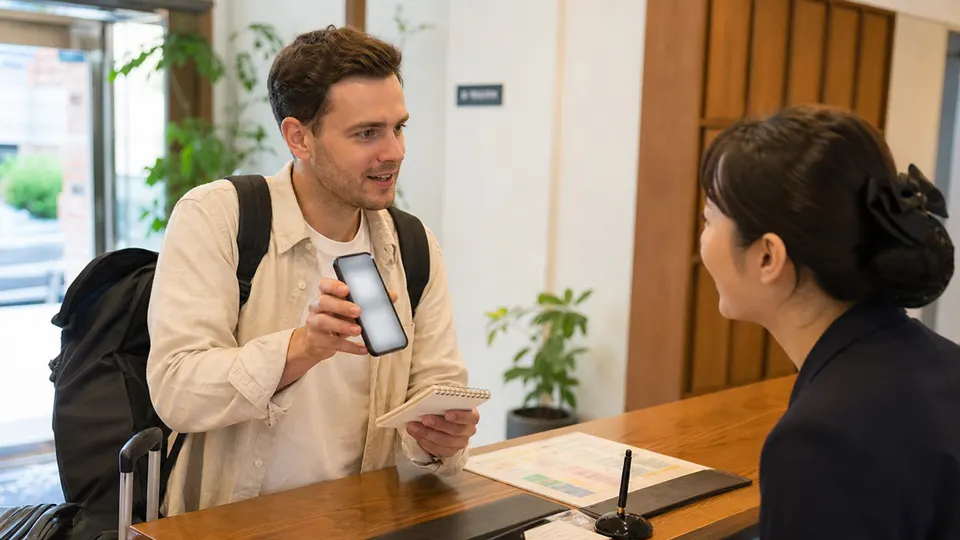
You usually do not need fluent Korean. Show the pharmacist a translated description of your symptoms, when they started, their severity, known allergies, medical conditions, and medicines you already took.
- Describe the symptom rather than demanding a foreign brand.
- Tell the pharmacist your age and whether the medicine is for a child.
- Disclose allergies, pregnancy, chronic disease, and current prescriptions.
- Ask how many tablets to take, how often, and whether the medicine causes drowsiness.
- Photograph the label and written instructions before leaving.
Products such as Brufen or EZN6 may contain ibuprofen, while Panpyrin or Pancold products can contain multiple cold-medicine ingredients. Availability and formulations vary. Confirm the active ingredient and strength with the pharmacist instead of treating these names as direct equivalents to Advil, NyQuil, or another overseas brand.
Essential Pharmacy Phrase Cheat Sheet
| English | Korean | Pronunciation |
|---|---|---|
| I have a headache. | 머리가 아파요. | Meo-ri-ga a-pa-yo. |
| I have a stomachache. | 배가 아파요. | Bae-ga a-pa-yo. |
| I have a sore throat. | 목이 아파요. | Mok-i a-pa-yo. |
| I have a runny nose. | 콧물이 나요. | Kon-mul-i na-yo. |
| I have a fever. | 열이 나요. | Yeol-i na-yo. |
| I am allergic to this medicine. | 이 약에 알레르기가 있어요. | I yak-e al-le-reu-gi-ga i-sseo-yo. |
| How many times a day? | 하루에 몇 번 먹어요? | Ha-ru-e myeot beon meo-geo-yo? |
| Where is an open pharmacy? | 문 연 약국이 어디예요? | Mun yeon yak-gug-i eo-di-ye-yo? |
Prescription vs. Non-Prescription Rules
Korean pharmacists can supply many OTC products after discussing your symptoms. Antibiotics, controlled medicines, and other prescription-only treatments require an examination and prescription from a Korean medical provider.
If the pharmacist recommends a doctor, search for 내과 (naegwa, internal-medicine clinic) or a relevant local clinic. Bring your passport, insurance information, medication list, and allergy details. Ask about consultation and testing costs before non-emergency treatment when practical.
Calling 119 in a Medical Emergency
Dial 119 for an ambulance, fire emergency, or rescue. If you do not speak Korean, say “English, please” or “Interpreter, please.” The operator can connect interpretation support.
- State that you need an ambulance.
- Give your location using a building name, hotel name, street address, subway exit, or smartphone GPS.
- Describe whether the person is conscious and breathing.
- Follow the dispatcher’s instructions and keep the phone available.
- Send someone to the entrance when possible.
Public 119 ambulance dispatch and emergency transportation are free. The receiving hospital separately bills for ER examination, tests, treatment, medication, procedures, and admission.
Medical and Interpretation Help Lines
- 119: ambulance, fire, rescue, and emergency medical response.
- 1330 Korea Travel Helpline: multilingual travel information and interpretation; it can help connect travelers with 119 and related services.
- 1339: Korea Disease Control and Prevention Agency consultation line, primarily for infectious-disease and public-health information. It should not replace 119 during an emergency.
- E-Gen: Korea’s emergency medical portal for locating hospitals, emergency rooms, pharmacies, and holiday or after-hours services. Verify availability by phone before traveling to a listed facility.
For urgent but non-life-threatening symptoms, use E-Gen or ask 1330 for interpretation assistance while locating an appropriate open facility. Pharmacy hours and language support can change, especially overnight and during national holidays.