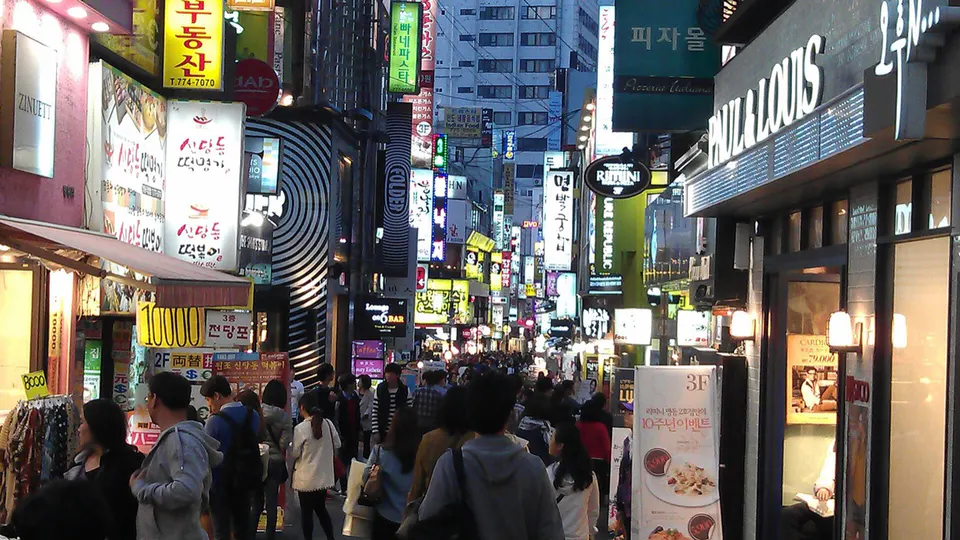
What Jongno 3-ga's pocha street is
This stretch is one of Seoul's most iconic pojangmacha (street tent bar) clusters, lined with orange tents serving grilled skewers, seafood, and Korean stews alongside soju and beer, drawing both older regulars and a younger crowd late into the night.
Payment logistics
Cash remains the more reliable option across the strip, particularly at smaller stalls, so withdrawing cash before your visit or keeping a reserve for this specific outing avoids awkward moments mid-meal.
Seating and etiquette
Seating is typically shared long tables inside the tent, service is informal and fast-paced, and it is common practice to flag down staff directly rather than wait to be approached.
Restroom and practical logistics
Since most tents lack private restrooms, locating the nearest public or convenience-store restroom before you settle in for a longer session saves an awkward mid-meal search, and staff can usually point you in the right direction if asked.
Useful Korean
Frequently asked questions
Do these street tent bars accept cards?
Many of the traditional tented stalls remain cash-preferred or cash-only, especially smaller family-run ones, so carrying enough cash is safer than assuming card payment will be available everywhere.
Are there restrooms at the tents themselves?
Most tented stalls do not have their own restroom, so patrons typically use a nearby public restroom, a partner building's facilities, or a convenience store restroom, and asking staff for the nearest option is common practice.
Is the area generally safe at night?
The street is heavily trafficked with a mix of locals and visitors, and is generally considered safe, though standard nightlife precautions -- watching your drink, keeping valuables secure, and traveling with a companion late at night -- still apply.
Official sources
Time-sensitive details were checked against the original sources below on 2026-08-28.