Cash vs card
Many individual stalls at Gwangjang Market are cash-preferred or cash-only, even though card payment is now more common across Korea generally -- this is a market of small, independently run stalls rather than a single managed food court. Carry some cash in small denominations; a nearby ATM or a stall willing to make change for a larger note is not guaranteed.
Shared seating
- Many stalls use shared bench-style seating directly at the counter, often with strangers sitting elbow to elbow -- this is normal market etiquette, not a sign the stall is unusually busy.
- Seats generally belong to whoever is eating -- don't hold a seat for someone who hasn't ordered yet if the market is busy.
- Some stalls only offer standing counters; others have small stools. Neither is a lesser experience -- it depends on the stall's layout.
Ordering and sharing portions
- Portions at many stalls (mung bean pancake, mayak gimbap, tteokbokki) are sized for sharing between two or more people rather than a single diner -- order fewer dishes across more stalls instead of one large dish per person.
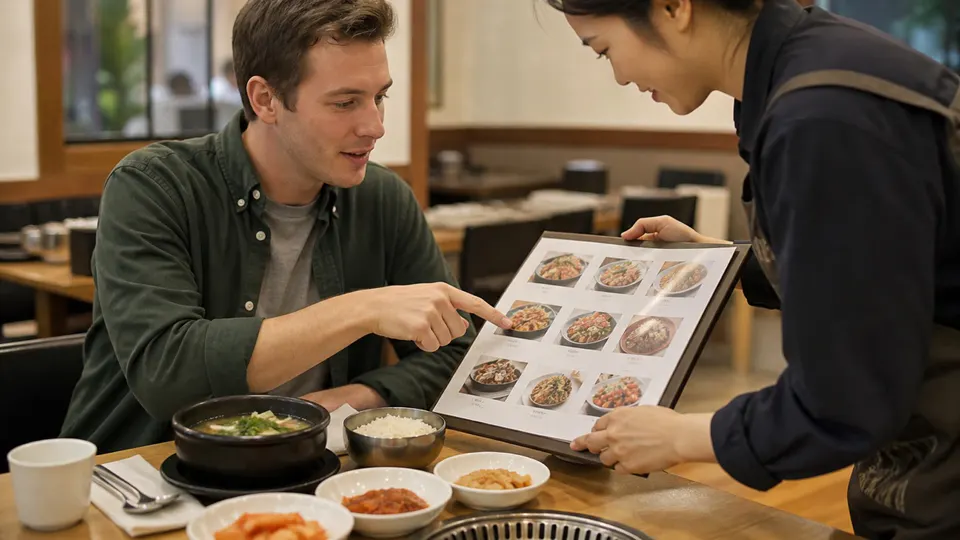
- It's common and expected to order from multiple different stalls and eat them together at shared seating, rather than committing to one stall's full menu.
- If a stall is visibly busy with a line, expect a faster, more transactional exchange -- have your order ready rather than deciding at the counter.
Treat a Gwangjang Market visit as market grazing rather than a sit-down restaurant meal: a few small dishes from a few stalls, shared standing or on a bench, paid mostly in cash.
Final practical check: save the official page, exact Korean address and nearest transit exit offline. Reconfirm opening hours, last admission, reservation cutoff and the complete Korean-won price on the day. Carry an overseas card plus a small Korean-won backup, keep receipts, and allow extra time for queues or accessibility. When staff, signs or a current government notice conflicts with an older travel post, follow the live instruction and use a safe alternative.
Official sources
Time-sensitive details were checked against the original sources below on 2026-08-28.