Tip: Prices are usually posted on a sign at each stall -- if you don't see one, ask before ordering, since a small number of stalls in heavily touristed areas have been known to charge more without a posted price.
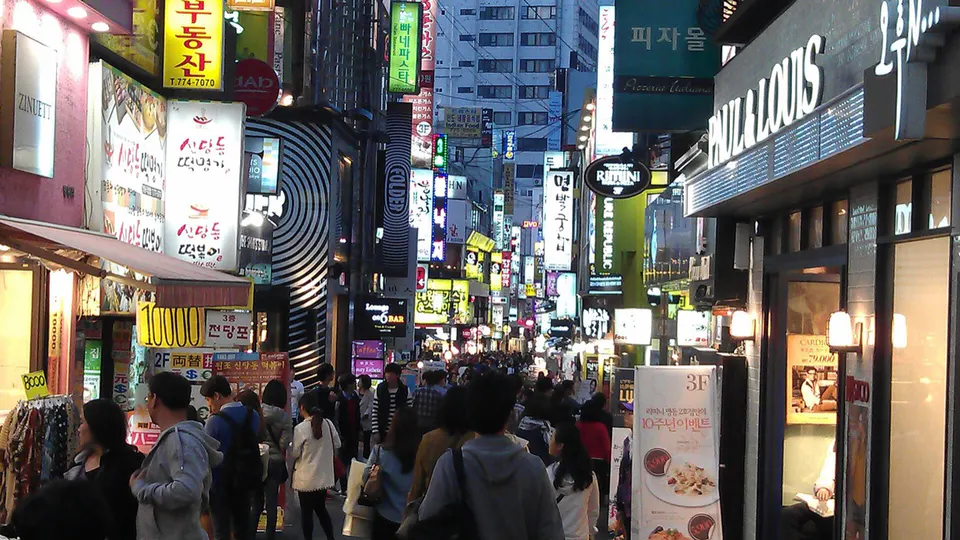
What to actually order
- Tornado potato (회오리 감자): a whole potato spiral-cut, skewered and fried, often finished with a seasoning of your choice -- one of the most photographed items on the street.
- Korean corn dogs (핫도그): the rice-flour-battered, often cheese-stuffed version that gained global popularity -- toppings like sugar or ramen-crumb coating are common add-ons.
- Grilled lobster tail or scallops: a pricier stall item that draws a visible line -- worth it if you want a splurge item, skippable if you're on a tight budget.
- Tteokbokki and sundae (Korean blood sausage): classic street-food staples sold from simmering carts along the strip.
- Bingsu or soft-serve stalls: a good palate-cleanser stop, especially useful if you've just had something spicy.
What a realistic budget looks like
Most individual street-food items run roughly ₩3,000-8,000, with premium items like grilled seafood running higher (₩10,000-20,000+ depending on the item and portion). A reasonable food-crawl budget covering 3-4 different stalls is often around ₩20,000-30,000 per person.
Timing and a few practical notes
- Stalls generally set up in the early evening (around 5-6pm) and are fully active by 7-8pm -- an afternoon visit will find far fewer stalls open.
- Most stalls are cash-preferred; card acceptance is inconsistent at smaller carts, so carry some cash specifically for this stretch.
- Eating standing up or walking is normal here -- there's little to no seating along most of the main strip.
- If you have dietary restrictions, sauces and batters at street stalls are often pre-made in bulk and hard to customize -- ask before ordering rather than assuming a stall can adjust an item on request.
Official sources
Time-sensitive details were checked against the original sources below on 2026-08-28.