Why Jongno 3-ga specifically
Jongno 3-ga hosts one of central Seoul's longest-running concentrations of classic orange-tent pojangmacha, an older-school stretch that has kept much of its original character even as other areas have modernized or converted to more conventional bars. It draws a genuine cross-section of regulars -- office workers unwinding after work, older locals who've been coming for decades, and increasingly, visitors seeking an authentic version of the experience.
Cash norms and payment
While card acceptance has improved over the years, this particular strip still leans more cash-reliant than newer bars elsewhere in the city, and having Korean won on hand avoids any friction at closing. Prices are typically posted on a menu board or handwritten sheet per dish, and it's worth confirming the total before ordering a larger shared spread if you're budget-conscious.
General tent-bar etiquette to know
- Sharing a table with strangers at busy times is common practice, not unusual or rude -- seating is communal and tight by design.
- Ordering at least one food dish alongside drinks is generally expected rather than optional, since these are food-and-drink establishments, not pure bars.
- Loud, animated conversation and toasting are part of the atmosphere -- don't expect a quiet evening, and don't feel self-conscious about the noise level either.
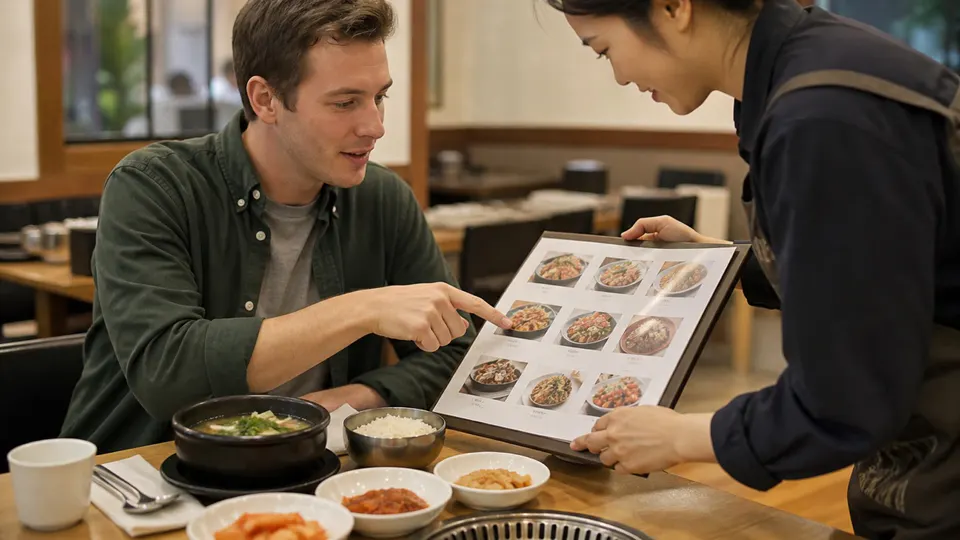
Seating at a pojangmacha tent is usually close quarters, with strangers sometimes sharing adjacent tables, and a level of noise and informality that differs from a standard restaurant setting. Menus are frequently displayed only in Korean on a wall board or laminated sheet, so pointing at a neighboring table's order or asking staff for a recommendation is a normal and expected way to navigate the choices. Tents typically operate only in the evening and late into the night, closing well before the following morning's breakfast crowd arrives elsewhere in the city.
Official sources
Time-sensitive details were checked against the original sources below on 2026-08-28.