Vegetarian and vegan food in Korea: an ordering guide
Why menu names are not enough
Bibimbap may include beef and egg. Gimbap commonly contains ham, egg or imitation crab. Kimchi may use fish sauce or salted seafood. Soups and stews often begin with meat, anchovy or seafood stock even when no visible pieces remain. Asking to remove a topping does not remove the broth.
Use precise Korean phrases
I am vegetarian.
I do not eat meat, fish, seafood, eggs or dairy.
Does it also contain meat stock or fish sauce?
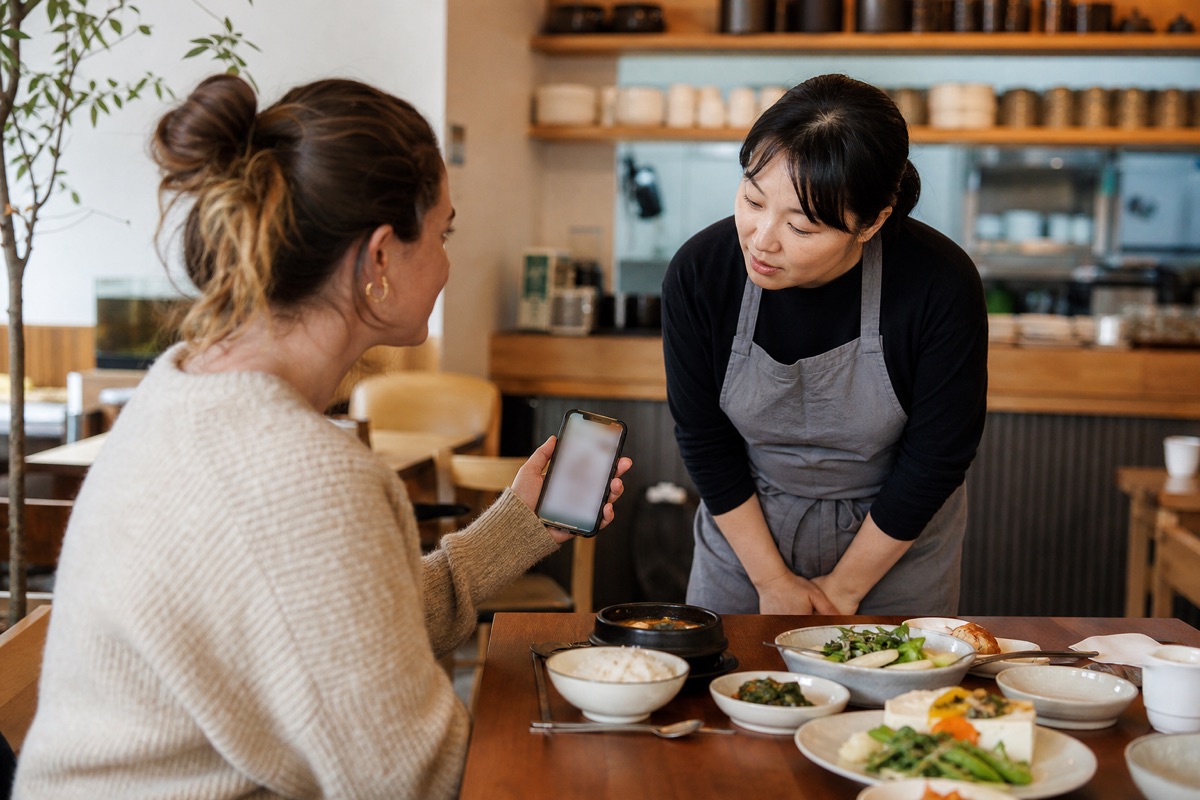
Adjust the list to your actual diet. Show the sentence on your phone and ask the staff to confirm. If the restriction is medical or life-threatening, use a professionally translated allergy card and choose a kitchen able to manage cross-contact.
Lower-friction choices
A dedicated vegan restaurant offers the clearest communication. Korean temple food is another useful category, although the exact restaurant and menu should still be checked. At a general restaurant, simple made-to-order dishes may be easier to discuss than a shared stew or a premade broth.
Convenience stores can provide a backup meal, but inspect labels carefully. A product marketed with vegetables can still contain animal-derived seasoning. Translation apps help with labels, yet automated translation is not a safety guarantee.
A practical meal routine
- Save two dedicated vegetarian restaurants near each accommodation area.
- Check current hours on the operator's official channel.
- Carry a precise Korean ingredient card.
- Order before peak time when staff can answer questions.
- Keep a packaged backup snack for late arrival or closed restaurants.
Define your boundary before you order
Vegetarian and vegan labels can mean different things to different people. Decide whether your boundary includes egg, dairy, honey, fish sauce, seafood stock and food cooked on shared equipment. Then communicate that list. A staff member can answer a concrete ingredient question more reliably than a broad question about whether a dish is vegan.
If you avoid animal products for preference, decide which shared-kitchen risks you accept. If you have an allergy, religious requirement or medical restriction, say so separately. Dietary preference and allergy safety are not interchangeable, and a restaurant that can remove meat may not be able to prevent cross-contact.
Check each part of the meal
- Main dish: ask about visible meat, egg, seafood and dairy.
- Broth and sauce: ask whether anchovy, meat stock, fish sauce or salted seafood is used.
- Side dishes: banchan can have different seasoning from the main dish, so do not assume every plate follows the same rule.
- Cooking surface: confirm whether the grill, pan, fryer or utensils are shared if that matters to you.
- Garnish: ask about dried fish, egg strips, cheese or meat added at the end.
When staff are unsure, choose another dish or restaurant rather than asking them to guess. A confident yes without an ingredient check is not stronger evidence than a clear explanation of the broth and seasoning.
Use a short ordering sequence
- Show your Korean ingredient sentence before choosing the dish.
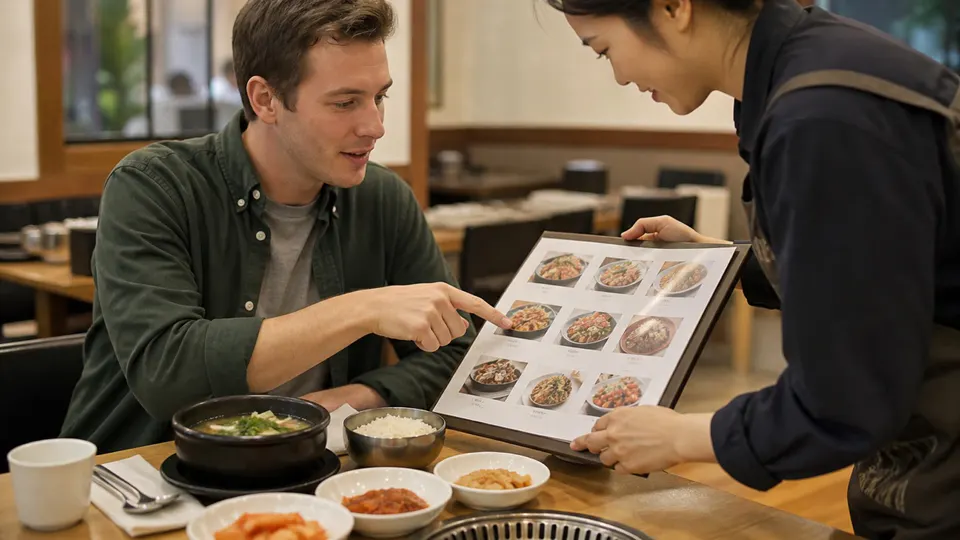
- Point to one menu item and ask about broth, sauce and garnish.
- Repeat the ingredients that must be removed.
- Ask whether removal is possible before payment, not after cooking begins.
- When the plate arrives, check unexpected toppings before eating.
Keep the request brief during a busy service. If the restaurant uses a kiosk, complete the customization only when every option is clear; otherwise ask staff before sending the order. Save a screenshot of the Korean sentence offline in case mobile data fails.
Plan a fallback that is still a meal
Late arrival, sold-out menus and closed restaurants are predictable travel problems. Keep one nearby dedicated vegetarian option, one packaged grocery backup and one simple accommodation meal in your plan. Check ingredient labels every time because flavors and formulations can differ within the same brand.
For a day trip, identify a suitable lunch before departure instead of expecting the attraction area to have a clear option. Bring enough food for the return journey, but follow venue and transport rules about outside food. The goal is not to find a perfect viral restaurant; it is to maintain energy without crossing your dietary boundary.