Telling the three soups apart
Seolleongtang is a milky-white broth made by long-simmering ox bones, typically served with thin slices of brisket and rice noodles, prized for its rich, almost creamy body built purely from hours of boiling rather than added dairy. Gomtang is a lighter, clearer cousin, often made from beef brisket or other cuts rather than bones alone, giving a cleaner, less opaque broth with a more pronounced meaty flavor. Galbitang is different again -- a clear, lightly seasoned short rib soup where the beef itself, still on the bone, is the centerpiece rather than the broth.
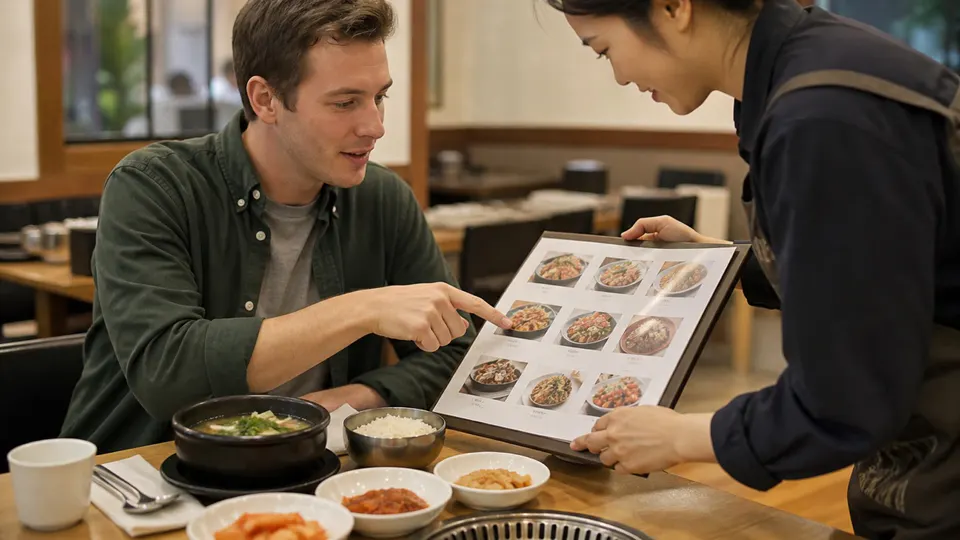
How to order at the counter or table
- Most specialist restaurants serve just one or two of these soups, so check the sign or menu board rather than expecting all three at every spot.
- Rice is often served separately in a small bowl or already added to the soup -- ask if you have a preference, since some diners prefer adding rice themselves gradually.
- A side of kkakdugi (cubed radish kimchi) is the traditional pairing, and its crunch and acidity are meant to cut through the richness of the broth.
Seasoning your own bowl
Once your soup arrives, use the table-side salt, ground black pepper, and chopped scallions to season gradually to your own taste rather than assuming the kitchen under-seasoned it -- this self-seasoning step is a deliberate part of the dining tradition, not an oversight. Galbitang typically arrives already seasoned and needs little adjustment, while seolleongtang and gomtang benefit most from a careful, gradual approach so you don't oversalt a large bowl you can't easily correct.
Official sources
Time-sensitive details were checked against the original sources below on 2026-08-28.