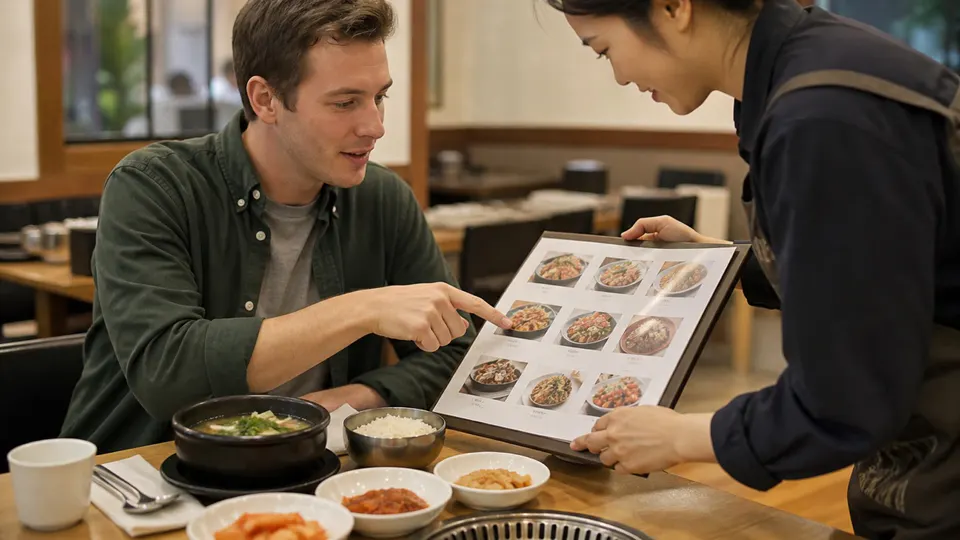
Why thoughtful preparation genuinely helps travelers with gluten sensitivities or allergies enjoy Korean food safely
Given Korean cuisine's generally significant reliance on rice as a base, combined with the potential presence of wheat in certain common sauces and seasonings, learning key communication phrases and researching generally safer dish categories in advance helps travelers with specific dietary needs navigate Korean dining with greater confidence.
Learning essential phrases for communicating your specific needs
Preparing clear, direct phrases naming your particular allergy or sensitivity, and practicing asking about specific ingredients before you need to use them in a real dining situation, gives you practical, ready tools for navigating unfamiliar menus.
Identifying generally safer traditional Korean dishes
Researching dish categories built around simpler rice, vegetable, and meat combinations, without heavy reliance on wheat-based sauces, gives you a helpful starting point for identifying menu options more likely to align with your dietary needs.
Remaining appropriately vigilant despite generally favorable conditions
Even with Korean cuisine's generally rice-forward base offering some natural advantage, continuing to confirm specific ingredients directly with restaurant staff for each dish, rather than assuming safety based on dish category alone, remains the most reliable approach to safe dining.
Useful Korean
Frequently asked questions
Is it generally difficult to eat gluten-free while traveling in Korea?
While rice forms a much larger base of traditional Korean cuisine compared to wheat, making many dishes naturally more gluten-friendly than in some other cuisines, certain common ingredients like soy sauce can contain wheat, so remaining attentive and communicating your specific needs clearly is still genuinely important.
What essential phrases should I learn to communicate a food allergy or gluten sensitivity clearly?
Learning clear, direct phrases specifically naming your particular allergy or sensitivity, along with a phrase asking whether a dish contains that specific ingredient, gives you practical tools for communicating your needs directly to restaurant staff even without extensive Korean language ability.
Are there certain traditional Korean dishes generally considered safer starting points for those with gluten sensitivities?
Dishes built around a simple rice and vegetable or meat base, without significant reliance on wheat-based sauces or breading, generally offer safer starting points, though always confirming specific ingredients directly with restaurant staff remains the most reliable approach given potential variation in preparation.
Official sources
Time-sensitive details were checked against the original sources below on 2026-08-28.