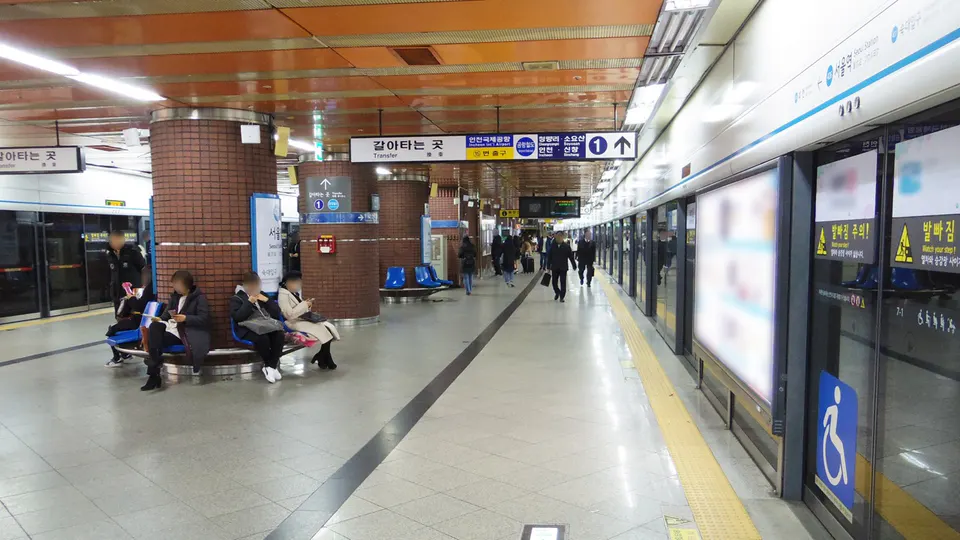
International transfer at Incheon Airport: the airside route
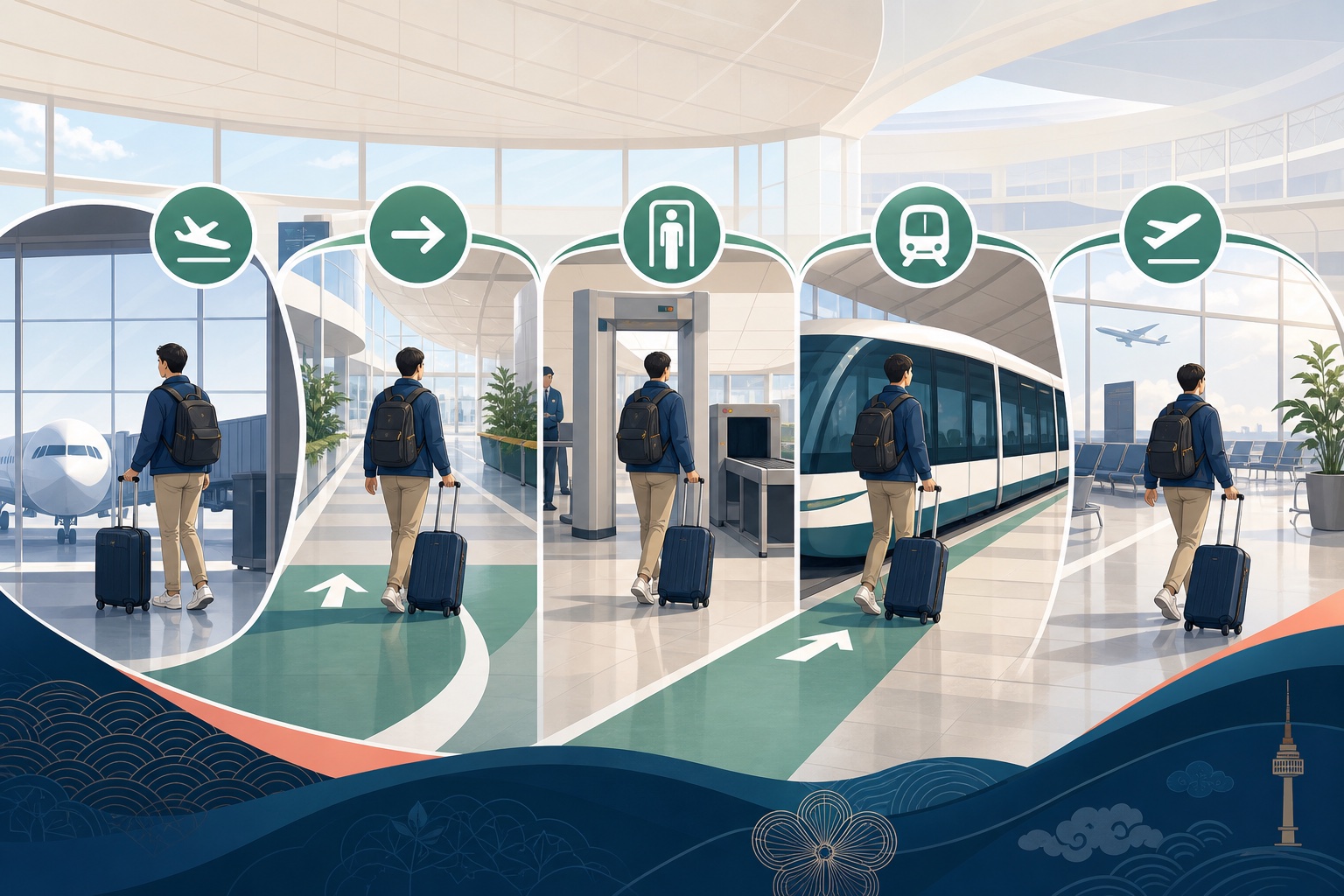
The quick transfer sequence
| Stage | Do | Do not assume |
|---|---|---|
| Before departure | Confirm baggage, boarding pass, terminals and connection acceptance | A codeshare marketing airline controls the process |
| After landing | Follow green Transfer signs for the actual arrival location | Every connecting passenger should follow immigration |
| Boarding pass | Use the issued pass or the airline-directed transfer desk | Every desk can issue every carrier's pass |
| Transfer security | Screen carry-on items again before the onward departure area | Origin-airport acceptance guarantees transfer acceptance |
| Terminal movement | Follow live signs and use the shuttle only when directed | Every shuttle movement can be reversed |
| Onward gate | Recheck terminal, gate, status and airline cutoff | A gate saved before landing cannot change |
Confirm six items with the operating airlines
Ask the airline operating each flight—not only the booking agency or codeshare brand—to confirm:
- whether checked baggage is tagged to the final destination;
- where the onward boarding pass will be issued;
- whether the carriers accept the itinerary as an airside connection;
- whether the terminal change is supported within the transfer route;
- the connection and gate-closing requirements for the ticket; and
- the procedure for delay, missed connection or an overnight layover.
Save the answer with both operating flight numbers. If an agent says the bag is checked through, verify that the printed baggage tag shows the correct final airport.
First decision: transfer airside or enter Korea?
This guide is for an international-to-international passenger whose airline has confirmed an airside connection. Follow Transfer signs instead of joining the immigration flow.
If baggage must be collected, the carrier requires landside check-in, or the itinerary cannot be handled airside, you may need to enter Korea. That changes the sequence to immigration, baggage claim, customs, landside movement, departure check-in and security. Confirm Korean entry eligibility independently. If unresolved after landing, ask the operating airline or transfer desk before immigration.
Follow the actual terminal and concourse route
Incheon publishes separate paths for Terminal 1, Terminal 2 and the concourse. The shared logic is Transfer signs, transfer security, the departure level and the onward gate; lifts, floors, desks and shuttle movements vary.
Use the airport's live flight information with the operating carrier and flight number. Codeshares and operational changes can make a general airline-terminal list unreliable. Recheck both inbound and outbound locations after landing.
Some routes use the basement shuttle train. Incheon warns on its concourse route that passengers cannot return in the opposite direction after boarding. Read the destination sign and follow staff direction before entering the train.
If you do not have the onward boarding pass
Incheon says a transfer desk may issue one, but availability varies by airline. The relevant desk and whether it is before or after transfer security can also differ. Follow the route-specific airport page and live signs.
Keep the passport, both operating flight numbers, booking reference, checked-baggage tag, destination documents and airline disruption contact accessible. A transfer desk cannot be assumed to solve every separate-ticket connection. If landside check-in is required, confirm entry eligibility and time for the full arrival-and-departure process.
Transfer security is another screening
Carry-on items accepted at origin can face another screening. Keep liquids, duty-free sealed bags, batteries and power banks accessible. Preserve eligible duty-free receipts and security packaging, but do not treat a sealed bag as unconditional permission.
Follow the stricter current airport, airline or destination rule when instructions differ. Never move a power bank to checked baggage merely to simplify screening. Prepare with the dedicated flight liquid guide and power-bank guide.
Build a real connection buffer
An airline's accepted minimum connection is not a promise of spare time. Usable time begins when you leave the aircraft and ends at the gate cutoff—not the published departure time.
Allow for deplaning, walking, boarding-pass help, transfer-security queues, terminal or concourse movement, gate changes and destination-document checks. If the inbound flight is late, check the onward status immediately and contact the operating airline or transfer desk before visiting a facility.
Long layover: airside rest is not Korean entry
Incheon lists transfer-area rest and shower facilities in its current directory. Locations, hours, maintenance, access and fees can change, so use the live directory instead of an old video.
Leaving the airport is a separate immigration decision. Verify entry permission, baggage handling, return screening, transport time and the airline's gate deadline first. An overnight connection does not automatically permit Korean entry or guarantee airside accommodation.
If the connection is disrupted
- Remain in the controlled route unless the airline instructs otherwise.
- Check the live onward flight and gate.
- Contact the operating airline or transfer desk.
- Confirm the checked bag's location and tag.
- Obtain a documented rebooking, boarding pass and terminal plan.
- Ask whether accommodation requires Korean entry before moving landside.
Protected connections, separate tickets and insurance policies can produce different remedies. Preserve boarding passes, delay notices, receipts and written instructions.
Transfer checklist
- Both operating carriers and flight numbers saved.
- Actual arrival and departure terminals checked.
- Final destination printed on the baggage tag.
- Onward boarding-pass method and airside handling confirmed.
- Destination and transit documents accessible.
- Liquids, duty-free items and power banks ready for screening.
- Gate cutoff, realistic buffer and disruption contact saved.
- Live flight, gate and route rechecked after landing.
Official sources
- Incheon Airport: Terminal 1 Transfer Route
- Incheon Airport: Terminal Transfer Route
- Incheon Airport: Additional Terminal Route
- Incheon Airport: Concourse Transfer Route
- Incheon Airport: Transfer Security
- Incheon Airport: Live Flight Information
- Incheon Airport: Transfer-Area Facilities
Official sources were rechecked August 25, 2026. Reconfirm route, gate, baggage, boarding-pass handling and facility access for the exact travel date.