Before you go
Seoul has vegan restaurants, temple-food venues and halal-certified or Muslim-friendly businesses, but labels describe different standards. Itaewon has the densest halal-oriented cluster; Insadong and temple-food areas are useful for plant-based traditions; Hongdae and Yeonnam offer modern vegan cafes. Always verify the current branch and hours.
Compare the options
A vegan venue should exclude animal ingredients, but cross-contact practices vary. Halal-certified, self-certified, pork-free and Muslim-friendly are not equivalent. Alcohol, gelatin, stock, sauces and meat sourcing matter, as do shared grills and fryers. Apps and maps are discovery tools, not substitutes for confirmation with staff or the certifier.
- Vegan: ask about 멸치육수 (anchovy stock), 액젓 (fish sauce) and 새우젓 (salted shrimp).
- Halal: ask about pork, alcohol, meat certification and shared cookware.
- Allergy: carry a separate allergy card because preference labels do not control cross-contact.
A practical step-by-step plan
- Shortlist venues from current official or certification sources.
- Call or message the exact branch about ingredients and kitchen handling.
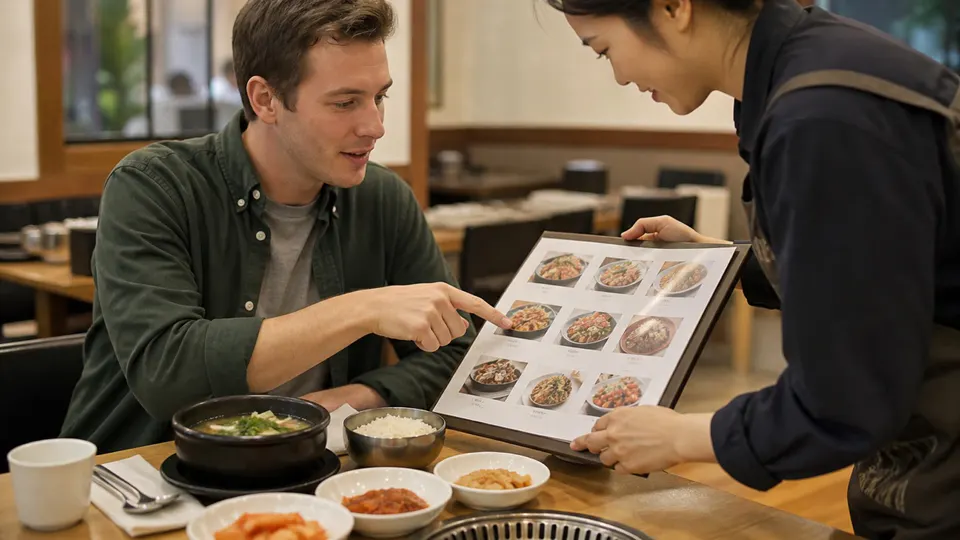
- Show a Korean dietary card before ordering and ask staff to repeat the safe dishes.
- If the answer is uncertain, choose a simpler sealed or clearly documented alternative.
Protect your time, money and health
Temple food is often plant-based but may exclude alliums for religious reasons; confirm if this affects your needs. Broths and fermented condiments are common hidden ingredients. People with celiac disease or severe allergy require stricter cross-contact checks than a lifestyle preference.
Official sources
Time-sensitive details were checked against the original sources below on 2026-08-30.