Cash or card at a Korean traditional market?
Published August 22, 2026 · Reviewed August 27, 2026 · Acceptance varies by individual stall
- Key point: Card acceptance varies stall by stall, so carry a foreign card plus a modest amount of small Korean-won cash.
- Price: Confirm the item, quantity and final won total before preparation and do not assume bargaining or tourist refund eligibility.
- Tip: Withdraw cash before entering the market and choose KRW if a terminal offers home-currency conversion.
Why one market can have several answers
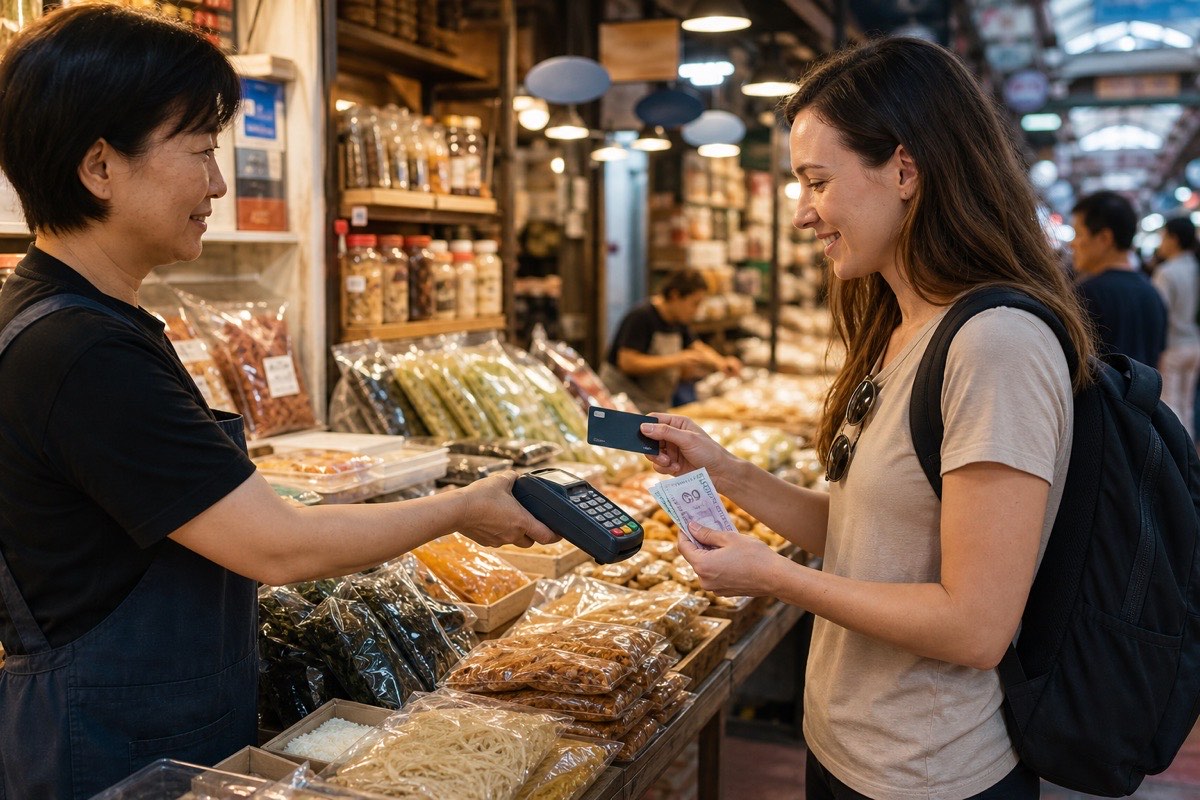
A traditional market is usually a collection of independent merchants, not one checkout system. A permanent clothing shop may accept Visa or Mastercard while the neighboring snack cart wants cash. A market information page listing “cash, credit card” does not guarantee that every stall accepts both.
In 2026, Korea's Ministry of Culture, Sports and Tourism and Korea Tourism Organization launched a service campaign at eleven markets emphasizing fixed prices, card acceptance, hygiene and friendly service. That is useful progress, but visitors should still confirm payment before an item is prepared.
A practical payment order
- Ask “Card okay?” and show the card network logo.
- If accepted, choose KRW when a terminal offers home-currency conversion unless you deliberately prefer the quoted conversion.
- If the card fails once, try a second card rather than repeatedly blocking it.
- Use small cash for stalls that clearly do not accept your cards.
- Keep enough separate money for transport and emergencies.
How much cash?
There is no universal amount. Carry enough for the snacks and small purchases you realistically plan, not the entire day's budget. Smaller notes are easier for low-value food orders. Avoid expecting every vendor to break a large note early in the day.
Withdraw cash before you depend on it
Do not assume the first ATM beside a market will accept every foreign card. Use a machine that displays your card network, read the operator fee and withdrawal amount, and decline any conversion you do not understand. Your home bank may add its own fee or limit. Withdraw in a well-lit bank, convenience store or official facility and shield the PIN.
Count the cash privately and store the main amount away from the small notes used at stalls. Keep the card and cash routes independent: if one foreign card is retained, declined or temporarily locked, you should still have a second payment method and enough protected fare to leave.
Mobile and QR payment
Some ZeroPay merchants accept connected overseas mobile-payment services from supported regions. Compatibility depends on the merchant and the wallet you already use. Seeing a QR code does not mean every international app can scan and pay. Confirm the wallet name and final KRW amount before authorizing.
Prices, bargaining and receipts
Look for posted prices and ask before ordering. Bargaining is not required and is inappropriate at fixed-price food stalls. For higher-value goods, confirm quantity, size, return terms and whether a receipt is available. If the price appears unclear, pause rather than arguing after preparation.
Use a four-number check
Before payment, confirm the unit price, quantity, any weight, and final total in Korean won. This matters when fruit, seafood, side dishes or dried goods are sold by weight or bundle. Point to the exact product and use a calculator screen when spoken numbers are unclear. Do not accept an unexplained total after packaging has hidden the quantity.
After payment, compare the terminal or receipt amount with the agreed total. Photograph the price sign only when it does not obstruct the stall or other shoppers, and retain the receipt for a higher-value purchase. If the merchant corrects a card transaction, keep both the cancellation and new receipt until the bank record settles.
Tax refund expectations
A tourist purchase is not automatically tax-refundable. The merchant must participate in an eligible refund system and issue the required receipt. Small food purchases, consumed items or a handwritten slip should not be assumed eligible. Ask before paying if the refund affects your decision.
Confirm the transaction before preparation
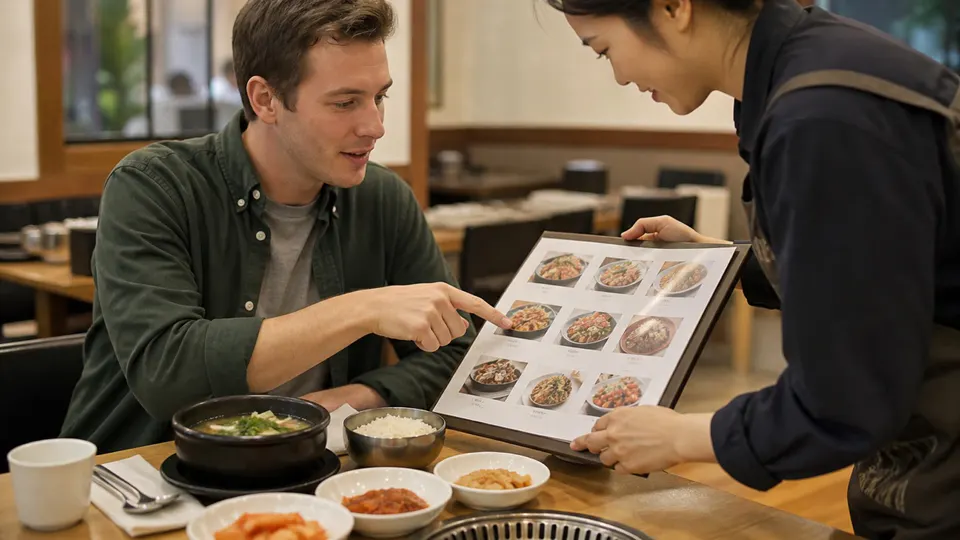
At made-to-order food stalls, point to the exact item and confirm the quantity, size and total price before cooking begins. For weighed goods, ask whether the displayed figure is per item, per portion or by weight. A calculator screen can help, but it should show the final won amount rather than an unexplained number.
Keep small purchases separate so one declined card does not hold up a crowded queue. If a terminal appears to charge twice, retain both receipts and check the banking status before paying a third time. A pending authorization is not always a completed sale.
If the transaction goes wrong
- Stay at the stall and calmly restate the item, quantity and agreed KRW total.
- Ask for the receipt or cancellation record and note the market, stall and time.
- Distinguish a pending card authorization from a completed duplicate charge.
- Use the market information desk or 1330 visitor help when language blocks a factual explanation.
- Contact the card issuer through its official channel if a completed charge remains wrong.
Protect the return-trip budget
Divide cash into a market allowance and a protected transport reserve. Do not spend the final transit balance simply because a stall cannot take your card. Before leaving the market, confirm that you still have a working route back, especially late in the evening when exchange counters may be closed.
Buying gifts without confusion
- Confirm whether the listed price covers one item, one pack or the full set.
- Check size, color, ingredients and expiration date before payment.
- Ask whether returns or exchanges require the original receipt and packaging.
- For fragile or perishable goods, decide how they will survive the rest of the day.
- Check your destination's customs rules before buying food, plants or animal products.
Food-market safety
Confirm portion size, allergens and whether a minimum order applies. Keep raw food purchases at a safe temperature and do not carry restricted animal or plant products across a border without checking destination customs rules.
Traditional-market payment questions
Does Gwangjang Market accept credit cards?
VISITKOREA lists cards as accepted at Gwangjang Market, but the market contains many independent stalls. Confirm with the specific seller before ordering and carry a modest amount of Korean-won cash as a backup.
Do Korean traditional markets accept foreign cards?
Some stalls and permanent shops accept international cards, while others may be cash-only or use a terminal that rejects a particular foreign card. Check before the seller prepares the order.
How much cash should I take to a Korean market?
Set a purchase budget plus a separate return-transport reserve. There is no universal amount because prices, card acceptance and the planned purchases differ.
Can tourists get a tax refund at a traditional market?
Only eligible purchases from participating tax-refund businesses qualify. A market location or ordinary receipt alone does not make every stall or purchase refundable.
Official sources
- VISITKOREA: 2026 traditional-market service campaign
- VISITKOREA: shopping payments and cash exceptions
- VISITKOREA: tourist tax refunds
- VISITKOREA: Gwangjang Market visitor information
Continue: Foreign cards · Exchange money · Tax refunds