Solo dining in Korea: what to order and when
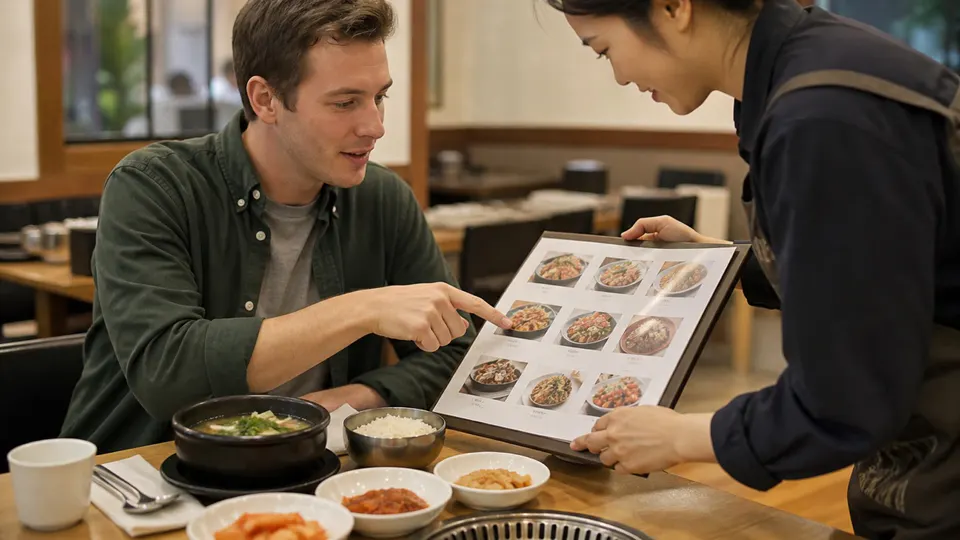
Many traditional Korean barbecue restaurants still require an initial order of at least two servings, even for one diner. Solo-grill venues and single-serving rice, noodle and soup dishes are safer alternatives.
Ask whether one person can meet the minimum before sitting down. Search for honbap-friendly counters or individual grills and keep a nearby single-serving backup rather than pressuring staff to waive a house rule.
Choose a solo meal in 60 seconds
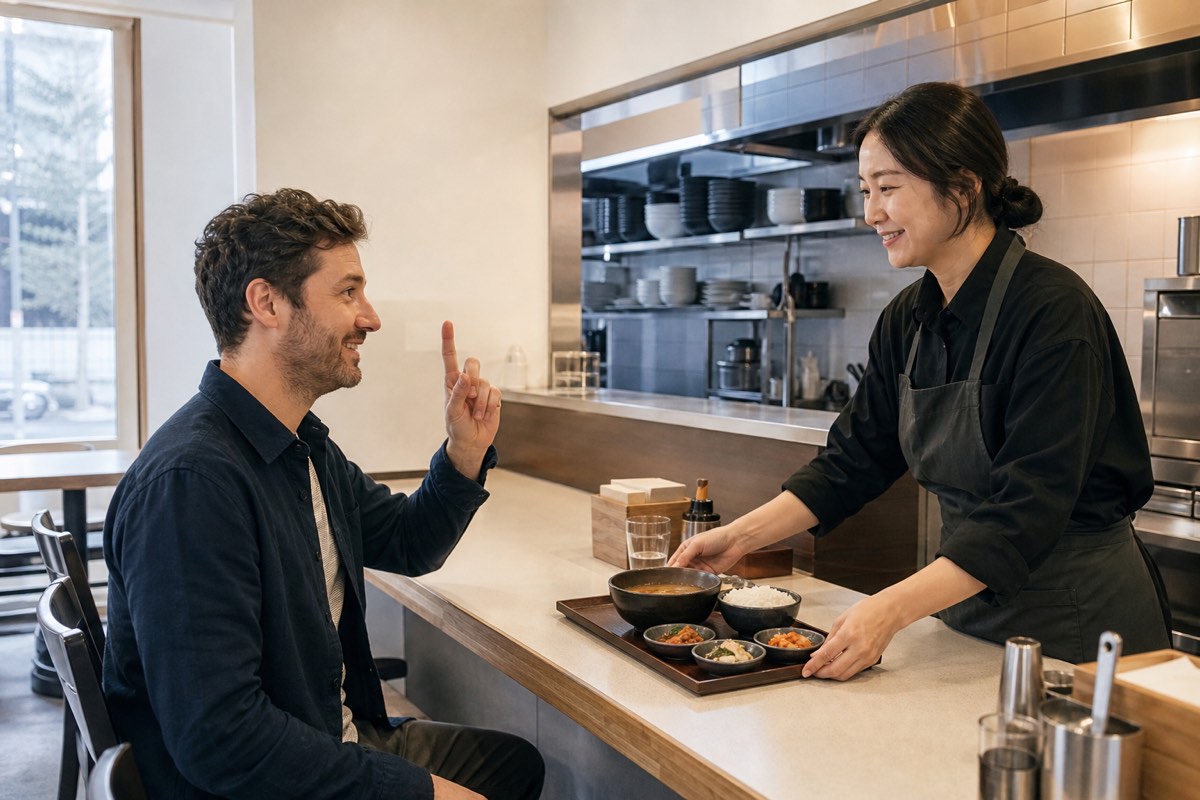
- Look for a counter, one-person tables or photos of individual trays.
- Choose a bowl, noodle, soup or set-meal format before shared dishes.
- Ask “일인분 주문 가능해요?” (Can I order one portion?) before sitting down.
- Check the kiosk for a minimum quantity before paying.
- If the answer is unclear, use the next saved restaurant instead of arguing at the door.
The easiest meal formats
- Rice bowls and bibimbap: normally ordered per person.
- Noodles: kalguksu, naengmyeon, ramyeon and noodle soups are commonly individual dishes.
- Soups with rice: gukbap, seolleongtang and many jjigae restaurants offer single portions.
- Bunsik: gimbap, dumplings, tteokbokki and simple noodles allow flexible portions.
- Food courts and convenience stores: clear prices and minimal ordering pressure.
VisitKorea’s overview explains that Korean meals often include rice, soup and shared side dishes, but it also highlights one-bowl foods such as bibimbap. The table format matters more than whether the cuisine is “traditional.”
Where one person may face a minimum
Barbecue meat is frequently sold by portion with a minimum initial order. Large hot pots, braised dishes, fried chicken sets and some seafood platters may also assume two or more diners. A menu price beside “2인분 이상” means at least two portions, not that one portion feeds two.
Solo barbecue exists, especially at counter-seat or individual-grill concepts, but do not assume every branch accepts it. Ask “Is an order for one person possible?” before waiting. Being refused usually reflects the equipment, portion or table economics—not hostility to foreigners.
Timing changes the answer
A small restaurant may welcome a solo diner at 14:00 but reserve grill tables for groups during the dinner rush. Visit just before or after peak lunch and dinner when flexibility matters. Avoid occupying a large table with drinks only when customers are waiting.
Official Visit Seoul material specifically recognizes both eating and drinking alone as established solo-travel activities. Still, venue information ages quickly; confirm the branch, hours and last order on the day.
Kiosks, call buttons and self-service
Some restaurants order at a kiosk before seating; others use a tablet, paper slip or server. Look for language controls before abandoning a kiosk. Photographing the menu for translation is fine when it does not include other customers.
Water and side dishes may be self-service. At a staffed table, the call button requests help; pressing it once is enough. VisitKorea notes that tipping is not normally required and that additional water or basic side dishes are commonly provided without a separate charge, but premium or menu-specific refills can differ.
Allergies and dietary restrictions
“Pork-free” and “halal-certified” are not interchangeable. Korea Tourism Organization publishes categories for Muslim-friendly dining and explains that some venues may serve alcohol or other non-halal dishes. Read the category definition rather than relying on a search label.
Read the seating signal
Counter seats, one-person grills, individual trays and a kiosk with a quantity of one are strong signs that solo dining is supported. Large shared burners, set menus priced for two and reservation-only rooms signal the opposite. Ask before joining a long queue because the waitlist may accept one guest even when the kitchen's minimum order does not.
Handle queues and ordering calmly
Confirm whether the queue is physical, written on a clipboard or managed by a kiosk. Keep the displayed number or ticket and stay within the stated return distance. When seated, order the required food first; adding a drink does not necessarily satisfy a minimum food order.
Before paying, check whether the bill is taken at the table, counter or kiosk. Review the total and collect the receipt. Splitting a bill is irrelevant when dining alone, but a card can still fail at one terminal, so carry a second method.
Use a graceful fallback
If a restaurant cannot seat one person, ask whether takeout is available or move to the saved backup. Do not pressure staff to change a two-person portion, grill setup or reservation rule. A nearby food court, soup shop or noodle restaurant can preserve the meal window without turning the refusal into a conflict.
A five-step solo plan
- Search the exact branch and current menu, not only the brand.
- Look for single-serving dishes or reviews mentioning 혼밥.
- Visit outside the busiest period.
- Confirm minimum order before sitting at a grill or large table.
- Keep a second nearby option instead of arguing over a house rule.