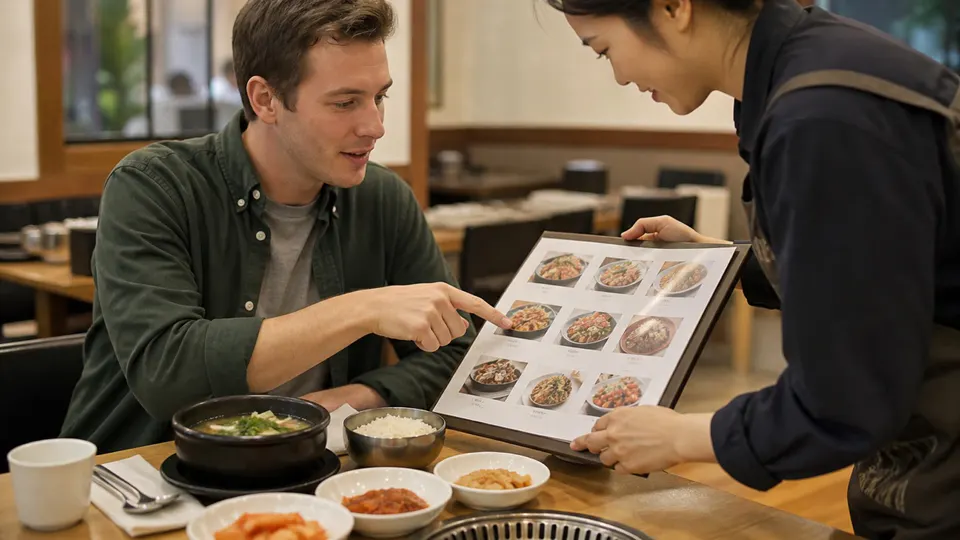
Korean convenience store meals: a first-visit guide
rice, noodles or sandwich1 side
egg, yogurt, fruit or salad1 drink
water first
Useful first-meal choices
Common categories include dosirak lunch boxes, triangle gimbap, sandwiches, cup noodles, salads, boiled eggs, yogurt, milk and packaged fruit. Stock varies sharply by branch and time. A business-district store at lunch and a residential store after midnight can feel like different shops.
Do not assume a product is vegetarian, halal, gluten-free or allergy-safe because of its visible ingredients. Rice snacks may contain tuna, mayonnaise, meat seasoning or seafood. Read the Korean ingredient and allergen sections and use the separate food-allergy checklist when the risk is medical.
Microwave and ramen stations
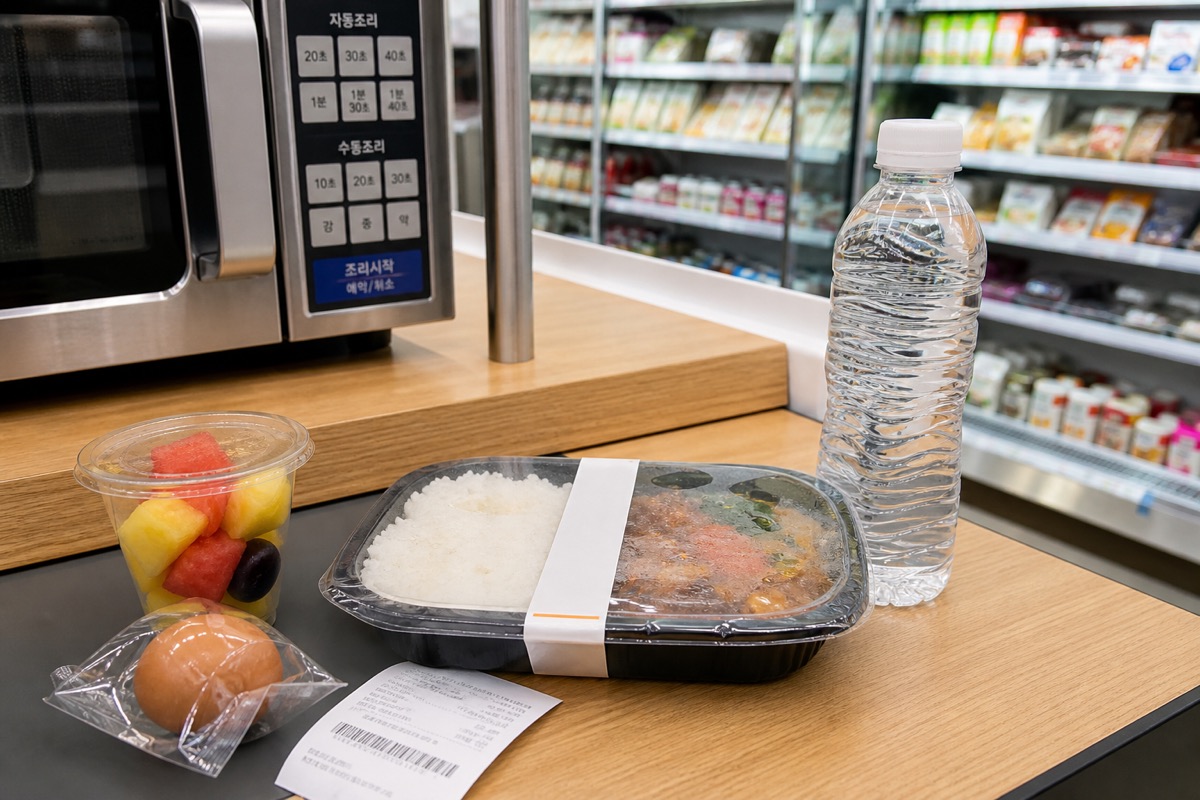
Pay before using store equipment. Heating time is usually printed on the package and may differ by microwave power. Remove prohibited lids or packaging only when the instructions say so. At a ramen station, buy the correct product and container first; follow the machine instructions and keep hot water away from the counter edge.
Understand promotion labels
1+1 generally means buy one and receive one promotional item; 2+1 generally means buy two and receive one. The eligible flavor, size and loyalty conditions may be specific. Confirm at the register instead of opening or consuming an assumed free item beforehand.
Eating space is branch-specific
Some stores have tables, scenic terraces or ramen zones; many do not. Do not sit on boxes, building steps or private entrances. Separate waste according to the store's bins, pour out liquid only where directed and return trays or utensils to the marked location.
Transit cards and payment
Convenience stores commonly sell or recharge supported transportation cards, but accepted payment for a recharge can differ from ordinary purchases. Keep cash or another payment method available. Ask before assuming a foreign card can fund the transit balance.
Read the package before building the meal
Confirm the product name, quantity, use-by or expiry information, storage condition and heating method. Similar packages can contain different fillings, and a refrigerated item should not be treated like a shelf-stable snack. If a label is unclear, use a translation app for discovery and ask staff before buying; machine translation cannot guarantee an allergy interpretation.
Keep the package until you finish eating. It preserves the ingredient list, heating instructions and barcode if you need to explain a problem. Do not heat a product merely because another customer heated something that looked similar.
Use a simple checkout sequence
- Place promotional items together so staff can confirm the offer.
- Ask for a bag before payment if you need one; bag rules and charges can vary.
- Pay and keep the receipt until every item and promotion is clear.
- Move to the heating or eating area only after checkout.
- Return to staff with the unopened product and receipt if the charge appears wrong.
A self-checkout may not explain every age, promotion or payment restriction in English. Use the staffed register when the transaction involves alcohol, transit-card recharge or a promotion you do not understand.
Three practical meal patterns
Late arrival: choose a familiar main item, water and a packaged breakfast for the next morning. Avoid buying several products that all require equipment the branch or accommodation may not provide.
Early departure: buy a sealed item that can travel safely, then check whether eating is allowed on the train, bus or venue. Keep liquids upright and do not rely on finding a bin immediately.
Hot-weather day: prioritize water and food that has remained under the required refrigeration. Carrying a chilled meal for hours turns a convenient purchase into a storage problem.
Microwave without creating a hazard
Read the package sequence before opening it. Some lids or sauce packets must be removed, while others are part of the heating design. Use only the stated time, keep steam away from your face and carry hot soup or rice with both hands. If a container leaks, ask staff for help rather than placing it directly into a bag.
At a shared ramen station, wait until the previous customer has cleared the controls. Match the machine setting to the purchased container and never leave hot water running unattended. Children should use hot-water equipment only with close adult help.
Know when a convenience-store meal is not enough
A convenience store is a useful backup, not a substitute for every meal. If you need strict ingredient control, a balanced medical diet or help with a severe allergy, choose a provider that can answer those needs directly. For several travel days, combine convenience purchases with regular meals, grocery food and water rather than repeatedly choosing by package image.
If you feel unwell after eating, preserve the package and receipt. Seek appropriate medical help for severe or rapidly worsening symptoms; do not rely on a store employee to diagnose the cause.