Capsule hotels in Korea: what to check before booking
light luggageCheckregistration
gender rulesAvoidif privacy or
access needs conflict
Check these six details before payment
- The exact property name, street address and accommodation type.
- Whether the booked sleeping area and bathroom match your gender and privacy needs.
- Locker dimensions and where large luggage must be stored.
- Reception hours, late-arrival procedure and any curfew.
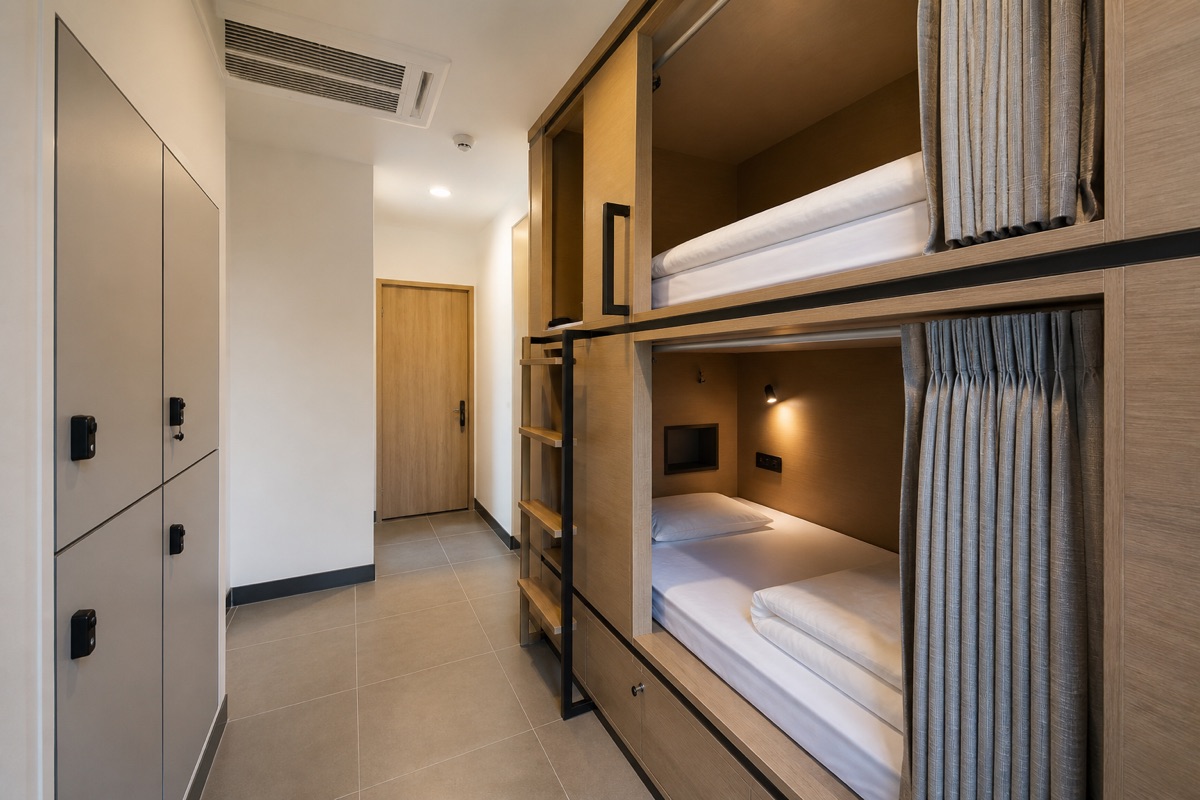
- Ventilation, noise rules and whether the pod closes or only has a curtain.
- Cancellation terms if the listing photos do not match the assigned space.
“Capsule” is a layout description
The word does not guarantee a standard room, service level or legal category. Some listings are compact hotel rooms; others resemble dormitory pods. Confirm the exact operator, street address and accommodation type. Seoul publishes accommodation information and links to official tourism lodging resources, which can help you cross-check a property rather than trusting a social post alone.
Inspect the sleeping space on paper
- Pod length, width and ceiling height
- Door, curtain or blind and whether it locks
- Ventilation and temperature control
- Power outlet location and voltage
- Upper-pod ladder and weight or mobility limits
- Quiet hours, alarms and staff availability
A pod door may be intentionally non-locking for safety. That makes a separate locker essential. Ask whether the locker fits your entire suitcase or only valuables. Never block the corridor or evacuation route with luggage.
Gender, bathrooms and privacy
Properties may separate floors, sleeping zones or bathrooms by gender, while others are mixed. Check how the property handles the identity shown on the reservation and whether a suitable option exists for your needs. Review shower cubicles, changing areas, towel provision and storage instead of assuming “private pod” means private bathroom.
Arrival and departure friction
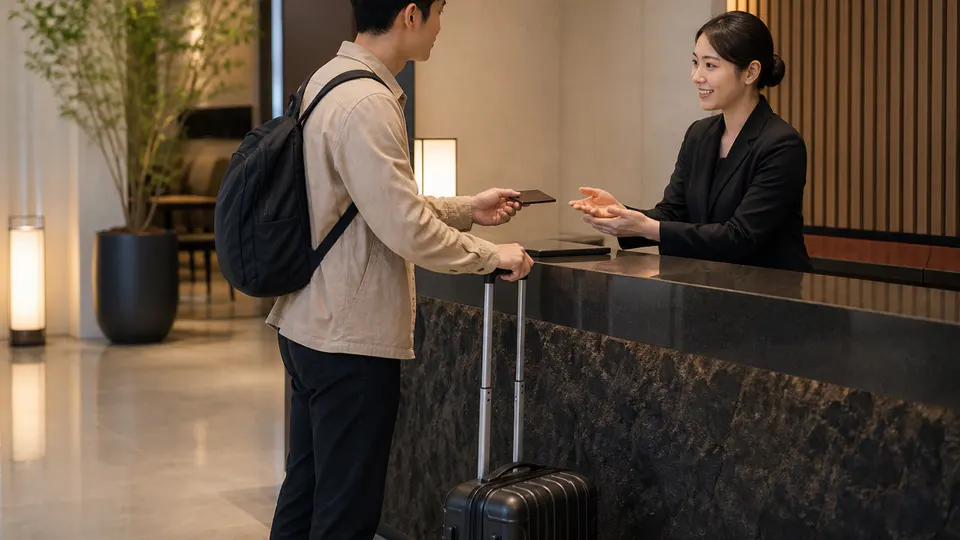
Confirm reception hours, after-hours entry, footwear rules, luggage storage before check-in and after checkout, and whether the listed price includes bedding, towels and taxes. A low nightly price loses value when you must pay separately for luggage or cross the city to reach it.
Capsule, hostel or goshiwon?
Choose a capsule for a short sleep-focused stay. Choose a hostel when social space and staffed traveler services matter. Consider a goshiwon only for a longer compact stay after checking contracts, windows and residence needs. These labels overlap in marketing, so the exact building matters more than the category.
Capture the booking evidence
Before payment, save the room or pod name, occupancy, gender rule, check-in window, cancellation terms and every included service. Keep screenshots of the dimensions and luggage promise because listing photos can show a different pod type. Match the property name and address across the booking platform, operator page and map result; similar names can point to different branches.
Read recent reviews for recurring operational issues such as heat, noise, inaccessible upper pods or an unstaffed entrance, but treat each review as an individual account. Ask the operator directly when a rule determines whether you can stay. A message saying late arrival is possible should explain how you enter, where identity is checked and who can help if the code fails.
Decide whether the sleep trade-off fits you
Capsules reduce private floor area, not the need for sleep. Earplugs can reduce ordinary movement noise but cannot solve poor ventilation, unsafe heat or an alarm problem. If you are a light sleeper, tall, claustrophobic, pregnant, recovering from an injury or likely to need the bathroom often, a compact private room may be the more reliable value.
Ask about an accessible lower pod before booking rather than expecting staff to rearrange beds at arrival. Check the route from the entrance to reception, locker, shower and exit. A lift in the building does not prove the sleeping level or bathroom is step-free.
Plan luggage separately from sleep
Measure your suitcase and compare it with the published locker or storage dimensions. Confirm whether storage is inside the sleeping zone, behind reception or in an unattended common area. Keep your passport, medicine, payment cards and essential electronics with you in a secure personal pouch, subject to the property rules.
If you arrive before reception opens or leave after storage closes, map another luggage option near your onward route. Do not assume a pod can hold a suitcase without obstructing airflow or the escape path. See the Seoul luggage storage guide for a retrieval-first plan.
Your first ten minutes after check-in
- Confirm the assigned pod matches the booked type and zone.
- Locate two practical exit directions and keep corridors clear.
- Test ventilation, the light, outlet and privacy screen.
- Check the locker, shower access and after-hours door.
- Report a material mismatch immediately and preserve photos.
If the operator cannot provide the booked essentials, contact the booking channel while the evidence is current. Do not wait until checkout to report an access, safety or room-type problem that staff could have addressed earlier.