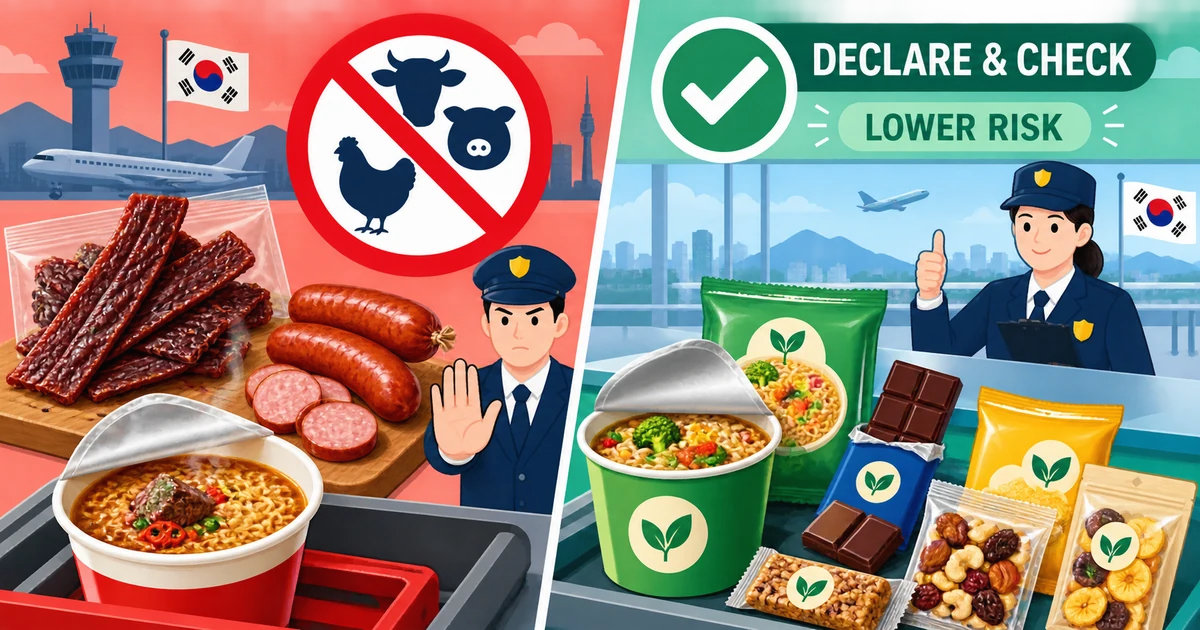
Why meat ramen can be a problem
Korean customs and quarantine screening covers livestock products and processed foods, not only raw meat. Jerky, sausages, ham and ramen containing beef, pork or chicken powder can be stopped. “Cooked,” “vacuum sealed,” or “store bought” does not automatically make an animal product admissible. Ingredient lists and origin matter, and outbreak controls can change by country.
Lower-risk food is not automatically cleared
Commercially sealed chocolate, candy, biscuits and vegan noodles are generally lower risk than meat products, but customs or quarantine officers make the final decision. Seafood, dairy, eggs, seeds, plants, fresh produce and homemade food can trigger different controls. Keep labels visible and avoid repacking items into unmarked bags.
Declare instead of calculating a penalty
Administrative penalties for undeclared livestock products can be severe and vary with the item and violation history. Do not use a web calculator as a promise that a food is allowed or as a precise fine quote. Select the declaration channel, present the item, and let the officer inspect or dispose of it. Declaration itself is not an admission of wrongdoing.
Pack for a fast inspection
Group food together in accessible luggage, photograph ingredient panels, and retain receipts. If a product contains ambiguous broth, flavoring, shortening or extract, choose “uncertain” in the checker. The safe result is to declare; the only reliable clearance is the decision at the border under current animal-health rules.
Verification checklist
- Use the official source: open the linked authority page again shortly before travel because law, eligibility, service and enforcement details can change.
- Keep evidence: save receipts, approvals, labels, screenshots and contact details offline.
- Ask when uncertain: declare goods or contact the responsible authority rather than relying on a calculator result.
Official sources
Time-sensitive details were checked against the original sources below on 2026-08-30.