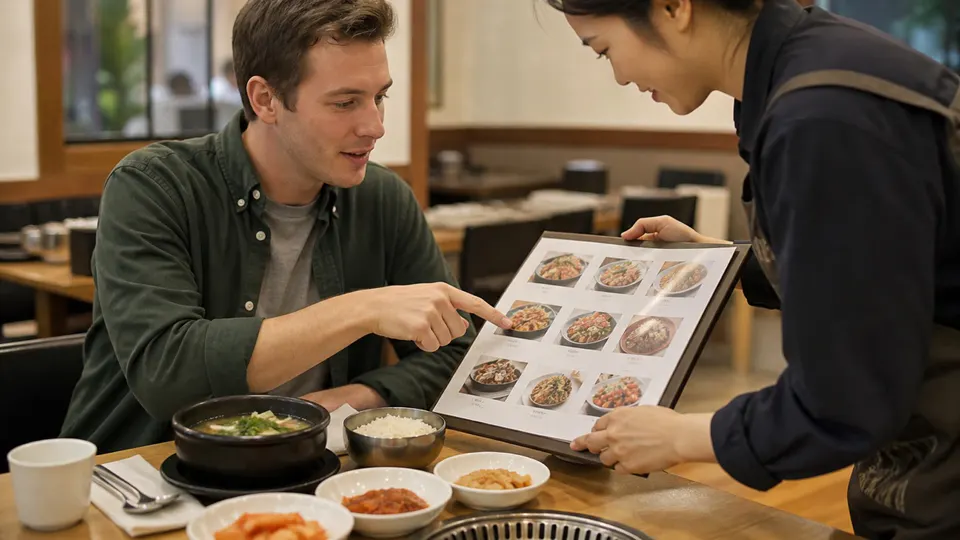
How Korean menus signal spice level
Many Korean restaurants and packaged foods use a numbered spice scale (often 1-5 or 0-3, e.g. "매운맛 1단계") or a chili-pepper icon system rather than the Scoville scale directly. Chain restaurants serving buldak-style dishes are the most likely to post an explicit numbered scale on the menu; smaller local spots may only say "맵게" (spicy) or "안 맵게" (not spicy) as a binary choice when you order.
- Ask for "덜 맵게" (deol maepge, "less spicy") when ordering if a dish is normally spicy and you want it toned down -- many places will adjust the gochujang or chili ratio on request.
- Packaged instant noodles often print a Scoville number directly on the package, which is a useful reference point since it's a fixed, comparable figure.
Roughly where common dishes fall
- Tteokbokki (standard): moderate heat, roughly comparable to a mild-to-medium hot sauce -- approachable for most first-time visitors.
- Buldak bokkeum-myeon (original): notably hotter than standard tteokbokki, built around a specific chili-oil blend rather than pure capsaicin heat.
- Buldak "extra spicy" / 2x versions: a significant step up again, sold as a challenge-level product rather than an everyday meal for most people.
- Yukgaejang and spicy jjigae stews: spicy but typically more balanced by broth and other ingredients than a dry noodle dish.
What actually helps when it's too hot
Water spreads capsaicin around your mouth rather than neutralizing it. Milk, plain yogurt drinks (like Yakult) or a scoop of vanilla ice cream work better because dairy fat binds capsaicin. Plain steamed rice or a starchy side also helps more than water by absorbing oil-based heat.
Final practical check: save the official page, exact Korean address and nearest transit exit offline. Reconfirm opening hours, last admission, reservation cutoff and the complete Korean-won price on the day. Carry an overseas card plus a small Korean-won backup, keep receipts, and allow extra time for queues, weather or accessibility. If current staff instructions, signs or government notices differ from an older travel post, follow the live rule and use a safe alternative.
Official sources
Time-sensitive details were checked against the original sources below on 2026-08-28.