Korea Cherry Blossom 2027: forecast, best spots and Seoul/Busan dates
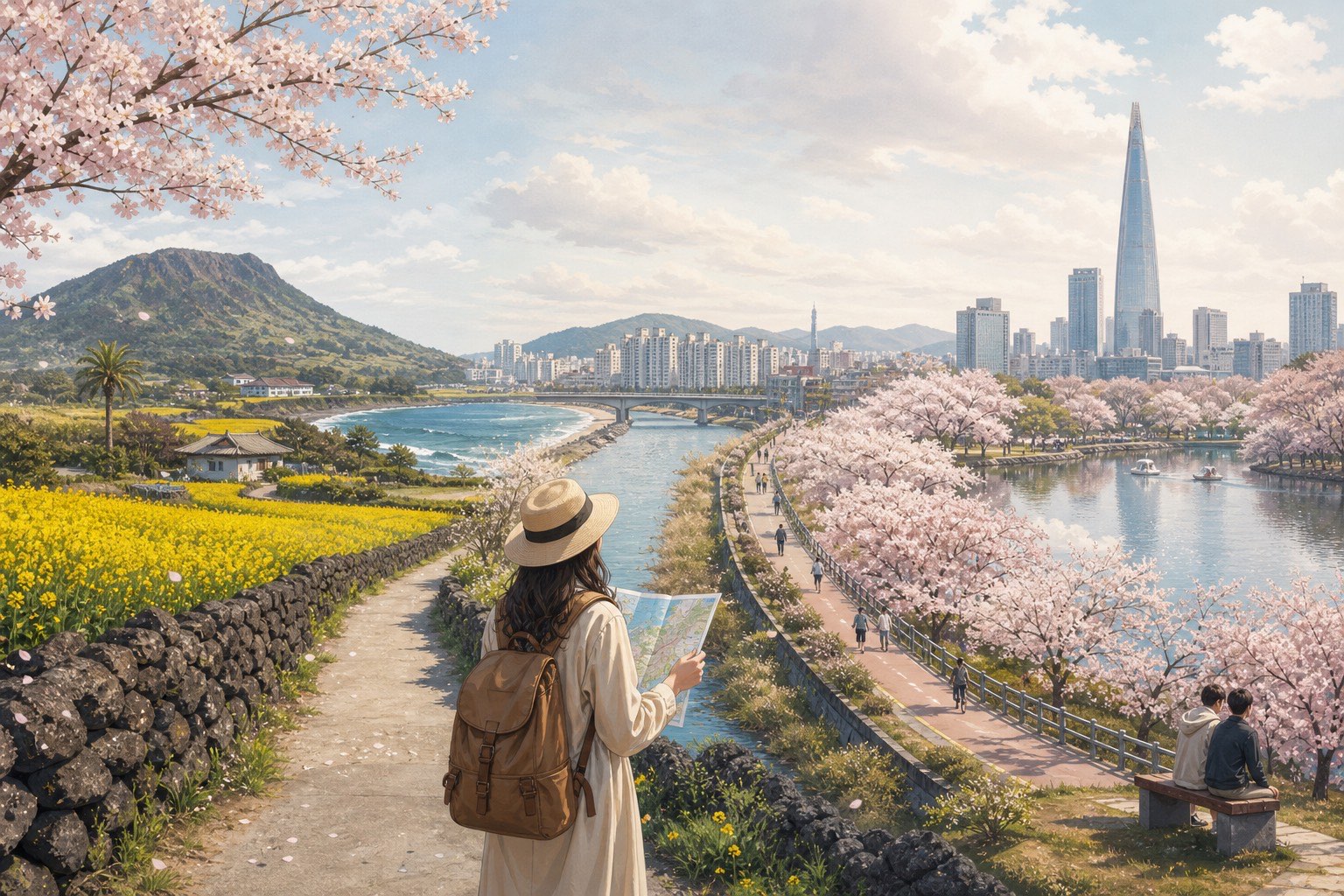
Spring moves through Korea unevenly. Build a useful trip first, then use the future forecast to fine-tune—not guarantee—the blossom window. Original Koursea editorial illustration.
Why a date cannot be promised yet
Cherry blossom timing depends on winter and early-spring temperatures, rain, wind and local conditions. A national forecast is an estimate of first bloom, not a reservation for full bloom at every tree. VISITKOREA's 2026 notice explicitly warned that actual bloom and peak dates could differ with weather, while describing peak as roughly one week after blossoming.
That “about one week” relationship is planning context, not a rule. Warm weather can accelerate opening; rain and wind can shorten the viewing period. Different species, elevation and microclimates can make two parks in the same city look different on the same day.
Use regions as options, not a race
| Region | What makes it useful | What to avoid assuming |
|---|---|---|
| Jeju | Spring landscapes can combine cherry blossoms with canola, stone walls, coast and island travel. | Earlier than mainland does not mean a specific road will peak on your flight dates. |
| Busan | Urban riverside, ecological-park and coastal-area options let spring fit a broader city trip. | An old city blossom map or festival date is not a 2027 operating schedule. |
| Gyeongju | Heritage landscapes can make the trip worthwhile even when blossoms are early or late. | Do not copy a prior year's race, festival or road-control date forward. |
| Seoul | Many parks, streams and neighborhood routes create alternatives within one transit network. | Yeouido is not the only option, and a festival date does not guarantee peak bloom. |
| Incheon / nearby Gyeonggi | A second regional window or day-trip option may fit an existing Seoul stay. | Do not add a distant transfer unless current conditions justify it. |
Build a blossom-resilient Seoul plan
Seoul's official tourism resources identify multiple spring-flower environments: major parks, riverside paths, neighborhood hills and urban lakes. That variety is more useful than betting the trip on one crowded festival street. Current official examples include Seokchon Lake and Anyangcheon, while broader park resources point to places such as Seoul Forest, Children's Grand Park and World Cup Park.
Choose a blossom stop that sits beside another reason to visit: a lake walk and nearby attraction, a park and neighborhood, or a stream route and market. If flowers are not ready, the day still works. Check park access and district notices separately because construction, crowd controls and festivals can change the useful entrance.
What 2026 can—and cannot—teach you
The archived 2026 VISITKOREA forecast estimated first bloom around March 25 for Jeju and Busan, March 28 for Jeonju and Gyeongju, April 1 for Gangneung, April 3 for Seoul and April 7 for Incheon. Those dates show the broad south-to-north planning pattern used in that particular year.
A booking sequence that limits regret
- Choose the city or region you want even without blossoms.
- Select a travel window based on the whole spring trip, not an unsupported viral calendar.
- Compare refundable and non-refundable accommodation honestly; pay extra for flexibility only when it protects a meaningful risk.
- Keep intercity travel simple. One strong base plus local alternatives is usually more resilient than daily blossom chasing.
- When the 2027 forecast appears, compare first-bloom estimates, likely peak lag and your exact parks.
- Seven to ten days before travel, check local tourism and park updates; recheck weather and crowd controls again on the day.
If you miss peak bloom
A spring trip does not fail when petals fall. Jeju's official spring material pairs cherry blossoms with canola and other flowers. Seoul's park guides include later spring flowers and double cherry blossoms at some sites. Replace “see perfect cherry blossoms” with “take a spring walk with the best current conditions,” then use current local sources to choose the place.
Do not enter planted areas, shake branches or block paths for photos. Popular routes serve residents and daily commuters. Follow temporary one-way walking routes, road controls and event instructions, and keep tripods out of pedestrian flow.