- Key point: Respectful observation matters more than memorizing a long rulebook; follow hosts, signs and shared-space norms.
- Price: Tipping is generally not expected, so pay the stated bill unless a specific service fee is disclosed.
- Tip: Watch for shoe-free entrances, keep transit quiet and ask before photographing people or ceremonies.
Respect matters more than perfect performance
Korean etiquette is often presented online as a long list of ways to offend people. That is misleading. Official Seoul tourism guidance notes that visitors are generally given room for unfamiliar mistakes. Pay attention to the setting, follow the host or posted instructions, and correct course calmly when someone helps.
Greetings and names
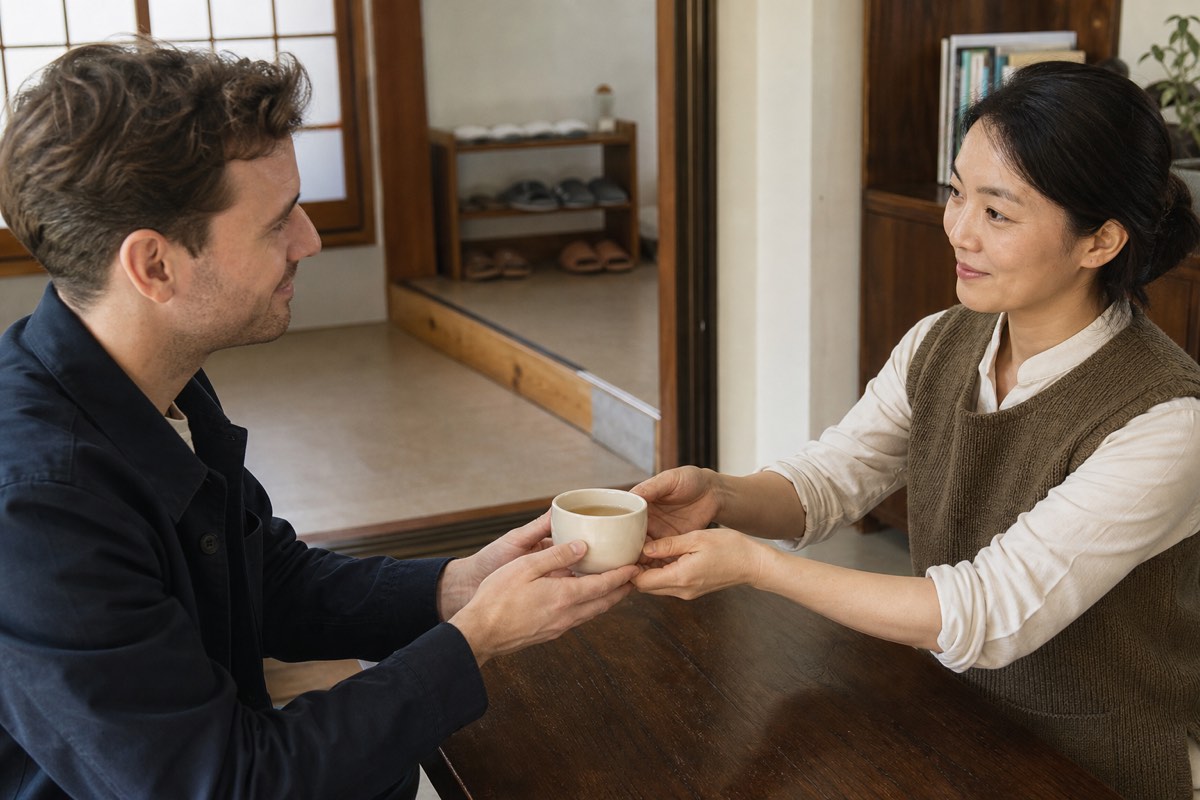
A small nod or light bow works for an ordinary greeting; visitors do not need to perform a ceremonial bow. A handshake may accompany it. Begin politely rather than assuming first-name familiarity, especially in a formal, professional, or older group. When exchanging a card, gift, document, payment, or drink, using both hands is a visible sign of care.
Watch the floor at entrances
Remove shoes when entering a Korean home and whenever a guesthouse, temple building, traditional room, restaurant, or clinic clearly marks a shoe-free area. Look for a step, shoe rack, slippers, or the behavior of others. Do not walk in socks through the outside shoe area, and do not wear bathroom slippers back into the main room.
Public transport and shared spaces
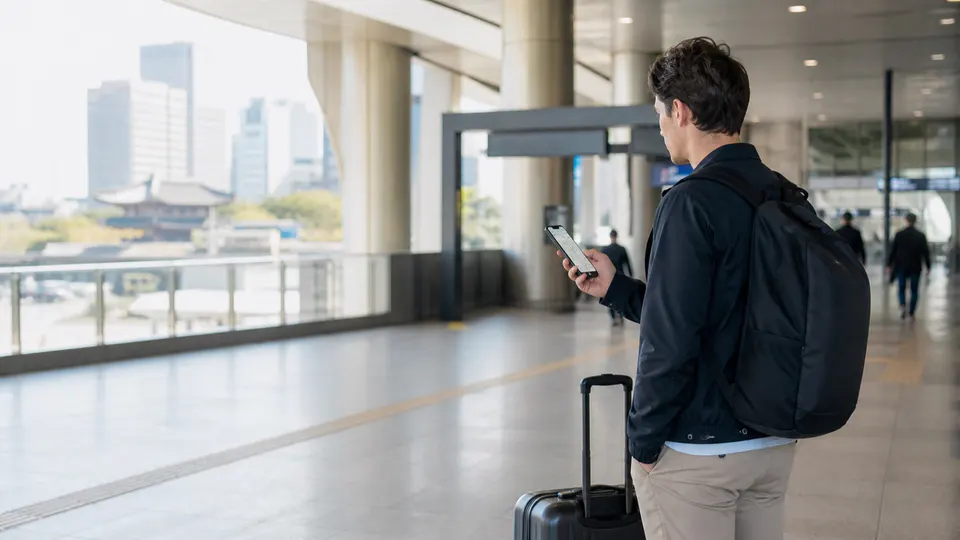
Queue where platform markings indicate, let passengers exit first, and keep bags from blocking seats or doors. Priority seats and marked spaces are intended for passengers who need them. Keep calls and media quiet; crowded contact is unavoidable, but pushing through without a brief acknowledgment is not.
Follow posted smoking, food, photography, and waste rules. Public trash bins can be limited, so carry small waste until you find the correct bin. Avoid assuming that a quiet alley, residential doorway, or café entrance is a public photo set.
Meals are easier when you observe the table
At a formal or multigenerational meal, wait for the host or older diners to begin. Do not leave chopsticks standing vertically in rice. Shared side dishes are common, but use serving utensils when provided and avoid searching through a shared plate. At restaurants, tipping is not generally expected; pay the stated total unless a venue clearly discloses a service charge.
Pouring and receiving drinks with two hands is polite in a formal group. No one should pressure you to drink alcohol: a simple, polite refusal is enough. See the restaurant-ordering guide for kiosks, portions, dietary questions, and payment.
Temples, memorials, and photography
Religious and memorial spaces deserve more restraint than a normal attraction. Dress and speak respectfully, follow restricted-area signs, and ask before photographing ceremonies or individuals. Korea Tourism Organization’s temple guidance advises visitors not to enter restricted areas or speak loudly, to use side doors rather than the central entrance to a Buddha Hall, and not to pass directly in front of someone meditating or chanting.
A location being popular on social media does not create consent. Ask before photographing identifiable people, especially children, workers, worshippers, patients, or someone in a vulnerable moment. Obey no-photo signs even when other visitors ignore them.
Shops, cafés, and service interactions
Queue, prepare the order or payment before reaching the counter, and avoid continuing a loud phone call while staff are helping. Put cash, cards, receipts, and documents into the other person's hand or the provided tray rather than throwing them onto the counter. A calm thank-you is enough; exaggerated bows or forced Korean are unnecessary.
Photography rules belong to the venue. Ask before filming staff, menus behind a restricted counter, changing rooms, clinics, or other customers. Buying a product does not automatically grant permission to record a worker for social content.
How to recover from a mistake
- Stop the action when a host, sign, or staff member corrects you.
- Offer a brief apology without debating the custom.
- Ask what you should do instead.
- Repair any practical impact, such as moving a bag or deleting a photo.
- Continue normally rather than making everyone manage your embarrassment.
Etiquette is contextual, not a test of whether a visitor performs Korean identity. Following current instructions and respecting consent matters more than copying a ritual from a video.
Four phrases that solve more than rules
Annyeonghaseyo
Hello.
Gamsahamnida
Thank you.
Joesonghamnida
I’m sorry / excuse me.
Gwaenchanayo?
Is this okay?
Polite intent, patient observation, and willingness to ask are more useful than memorizing dozens of rigid rules.