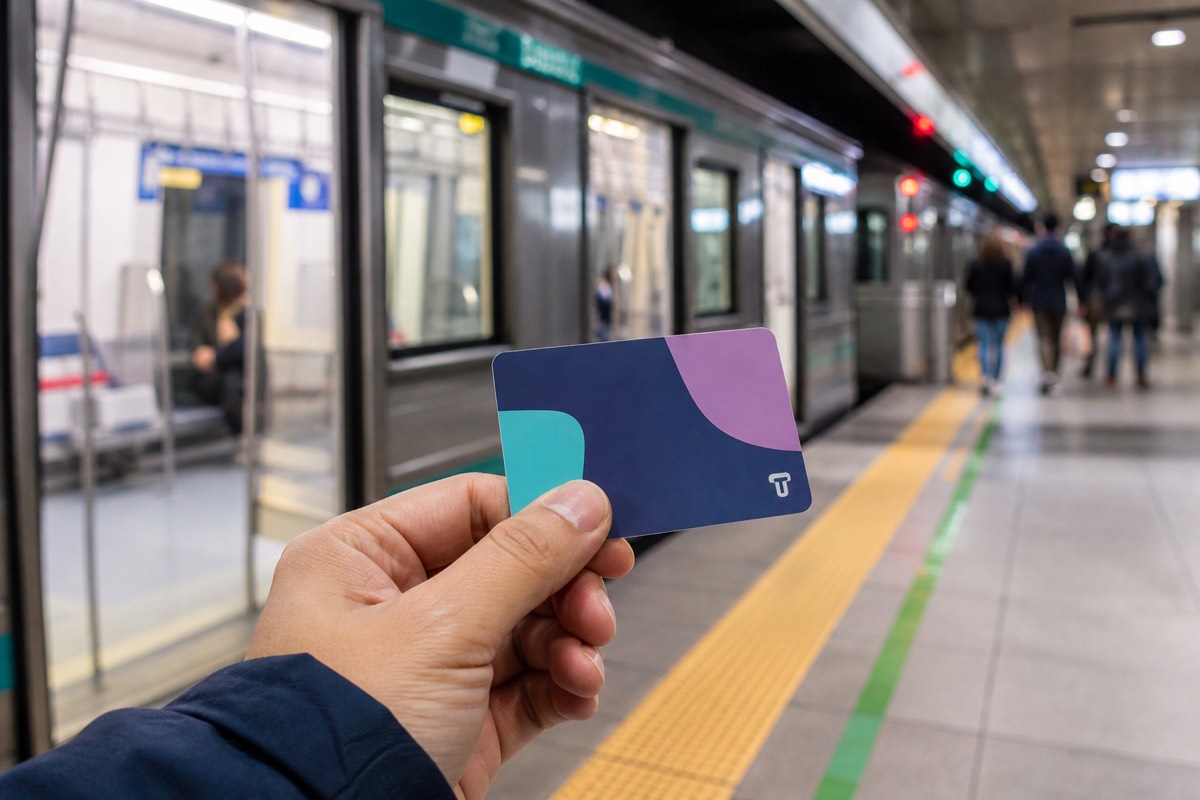
- Key point: A reloadable transportation card is the simplest default for subways, buses and eligible transfers.
- Price: Compare single rides with any short-term pass using your actual itinerary; coverage and purchase methods differ.
- Tip: Tap both in and out, confirm the destination direction and plan the entire route including the final service.

Start with a reloadable transportation card
For most visitors, a standard Tmoney or EZL card is the simplest option. Korea Tourism Organization says both are prepaid cards available at convenience stores nationwide and usable across public transportation. Load a modest amount first; you can add more later.
Overseas-card update for Seoul: since March 17, 2026, 440 new vending machines at 273 stations on Seoul subway Lines 1–8 accept internationally issued cards for single-journey tickets and short-term Climate Card purchase or recharge. This is payment at the vending machine; it does not mean every overseas bank card can be tapped directly at a subway gate or on a bus.
Seoul also offers short-term Climate Card passes for unlimited travel within their covered area. Coverage and product rules change, so compare the current official terms with your itinerary instead of assuming an unlimited pass covers every airport or regional journey.
Using the subway
- Find your destination station and note the line number or color.
- Follow signs toward the correct terminal station; the same line runs in two directions.
- Tap your card at the entry gate.
- Transfer inside the paid area by following the next line's signs.
- Tap again when leaving at your destination.
A single-journey ticket is possible, but a reloadable card removes the need to buy a new ticket each time and is generally easier for transfers.
Using buses
Tap when boarding and tap again before getting off. On many city buses, you should press a stop button after your stop is announced or displayed. Keep your card ready before reaching the reader so you do not block the doorway.
Why tapping out matters
The transport system uses your exit tap to calculate distance and transfer eligibility. Korea Tourism Organization specifically advises tapping both when boarding and getting off buses, as well as when entering and leaving subway stations. Skipping the final tap can affect the fare or the next transfer.
Arriving from Incheon Airport
The Airport Railroad offers express and all-stop services toward Seoul. Airport buses serve Seoul and other cities. Choose based on your final address, luggage, arrival time, and whether your accommodation is close to a railway station or an airport-bus stop. Check the airport or operator's current timetable on the day of travel.
Plan the whole route, not only the line
Save the destination in Korean and compare the station exit with the actual building entrance. A route with one extra stop can be easier when it avoids stairs, a long underground walk or a difficult bus transfer. With luggage, check elevators and the final street segment before choosing the fastest result.
For a late trip, note the departure time of every required connection. The last train on the first line is not useful if the transfer line has already stopped. Keep enough battery, a small cash reserve and a licensed taxi fallback.
Recover from a wrong direction or missed stop
- Step away from the platform edge or bus door and check the station or stop name.
- Confirm whether you can reverse direction inside the paid area.
- Do not exit through a gate merely to inspect a map unless staff directs you.
- On a bus, get off at a safe stop, tap out and recalculate from that location.
- If the card or gate displays an error, use the staffed assistance point rather than forcing the gate.
Allow for mobility and luggage
Elevators may be farther from the most direct exit, and buses may be crowded during peak periods. Build extra time when traveling with a stroller, wheelchair or large suitcase. Ask station staff for the accessible route when signage and the app disagree, and avoid blocking priority areas or doorways.
Common first-day mistakes
- Following only the line color and boarding in the wrong direction.
- Assuming every unlimited pass includes the airport, GTX, or all regional services.
- Forgetting to tap off a bus.
- Loading a large balance before knowing how much you will use.
- Using an old blog's fares or pass coverage without checking the operator.
Official sources
This guide summarizes the routine and deliberately avoids hardcoding fares that can change.