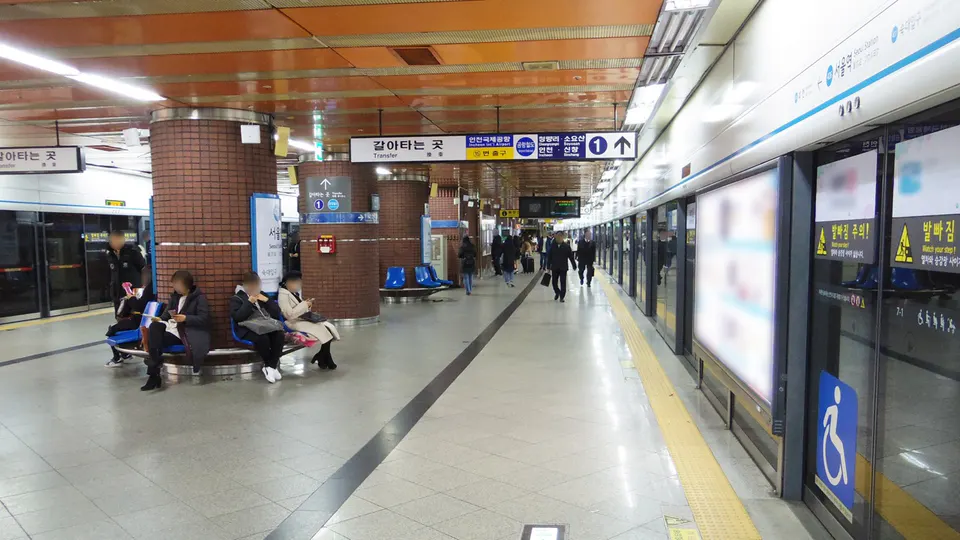
Why Line 9 works differently from most Seoul lines
Line 9 is one of the few Seoul subway lines running a genuine express service alongside its regular local trains on the same track, skipping select stations to cut overall travel time along its route through Gangnam and western Seoul. Most other lines in the network run local-only service, making Line 9's dual system something visitors familiar with the rest of the subway may not expect.
Spotting express vs local trains
- Platform digital displays typically indicate whether an approaching train is an express (급행) or local service before it arrives.
- Express trains are usually marked with a distinct color or symbol on both the train exterior and station signage.
- If your destination isn't a major express stop, check signage carefully -- boarding an express train that skips your station means riding past it and backtracking.
When taking the express actually matters
For a longer ride along Line 9's full route -- say, from Gimpo Airport toward central Gangnam -- the express service can save a genuinely meaningful amount of time compared to the local train stopping at every station. For a short hop of just one or two stations, the time difference is negligible, and simply taking whichever train arrives first is the more practical choice.
Line 9 earned an early nickname referencing its crowding during peak commuting hours, a reputation that has eased somewhat with added train cars but still makes off-peak travel noticeably more comfortable when it's an option. The express service is particularly valuable for travelers heading to or from Gimpo Airport, cutting a meaningful chunk of time off what would otherwise be a longer all-stop ride. Station platforms clearly separate express and local boarding areas in many stretches of the line, so paying attention to platform markings helps avoid boarding confusion.
Official sources
Time-sensitive details were checked against the original sources below on 2026-08-28.