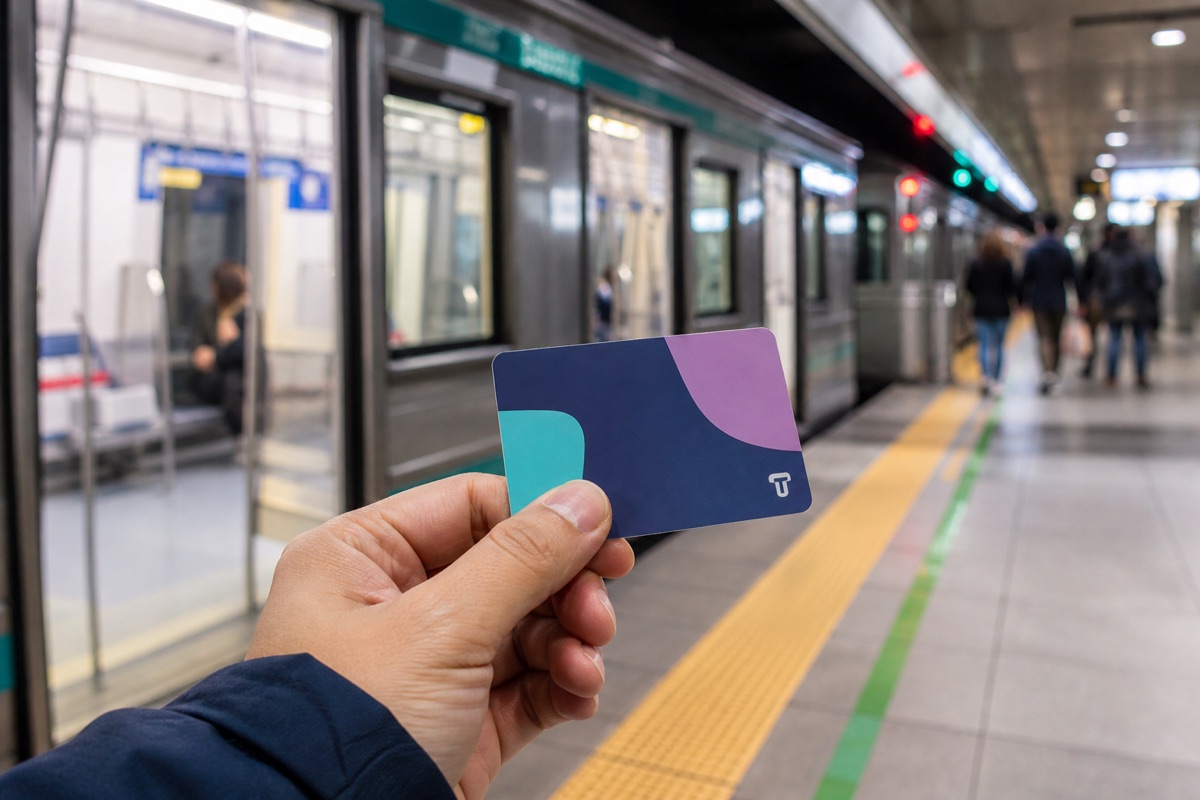
Which is better: Climate Card, T-money or WOWPASS?
Choose the Climate Card for repeated eligible Seoul rides, T-money for flexible pay-as-you-go travel, or WOWPASS when you also want a prepaid payment wallet. Recharge rules and fees differ, so treat the payment wallet and transit balance as separate products.
| Card | Cost / recharge | Best fit |
|---|---|---|
| Short-term Climate Card | Physical card ₩3,000; passes ₩5,000–₩20,000. Supported machines accept cash and international cards; international-card payments average about 3.7% service fee. | Repeated eligible Seoul subway and bus rides over 1, 2, 3, 5 or 7 days. |
| T-money | Card price plus pay-as-you-go fares. Cash is the reliable recharge fallback; card support varies. | Flexible travel in Seoul and beyond Climate Card coverage. |
| WOWPASS | Check current wallet fees in the app; its separate transit balance follows T-money recharge rules. | A prepaid payment wallet plus physical T-money function. |
What changed in March 2026?
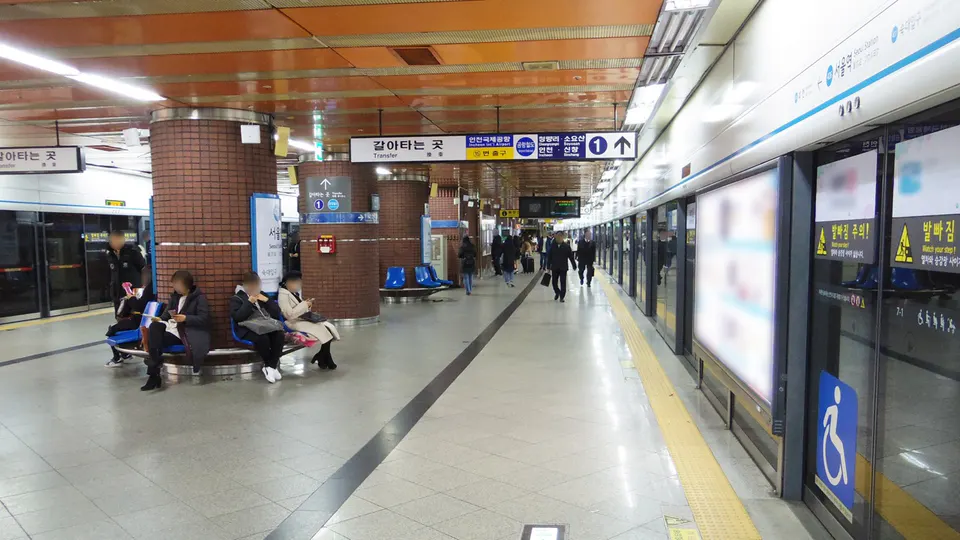
Seoul Metropolitan Government announced that 440 new transit-card vending machines at 273 stations on subway Lines 1–8 began accepting internationally issued credit and debit cards. The city specifically described Visa and Mastercard, along with supported mobile-payment methods, as payment options at those machines.
The change is useful for a traveler who reaches a station without Korean cash. At a supported machine, the visitor can pay for a single-journey ticket or a short-term Climate Card rather than first finding an exchange counter or ATM. Seoul's announcement states that an average service fee of about 3.7% applies to internationally issued card payments, so compare the displayed total before authorizing.
What did not change?
The announcement concerns payment at ticket and card machines. It is not a nationwide promise that every foreign contactless bank card works as an open-loop fare card on every subway gate or bus reader. A card can successfully pay a vending machine and still be the wrong item to tap for travel.
Your practical choices
| Choice | Best for | What you tap |
|---|---|---|
| Single-journey ticket | One Seoul subway ride or a traveler testing the system before buying a card | The ticket issued by the machine |
| Short-term Climate Card | One, two, three, five or seven days of repeated travel inside its covered network | The charged physical Climate Card |
| T-money or another accepted transit card | Flexible trips across Seoul and beyond, with pay-as-you-go fares | The transit card, not the bank card used to obtain or load it |
How to use an overseas card at a supported machine
- Select English or another available language.
- Choose a single-journey ticket or the exact Climate Card short-term pass you need.
- Check the destination, coverage and validity before paying.
- Use the displayed overseas-card or supported payment option.
- Collect the ticket or card and any receipt.
- Tap the issued fare media at the gate and keep it until the journey is complete.
A machine may be unavailable, a particular card may still be declined, or a journey may extend beyond a pass's service area. Keep another card and a small Korean-won reserve instead of relying on one payment route.
Keep the machine receipt and fare media separate
The bank-card receipt proves how you paid, while the issued ticket or transit card is what controls gate entry and exit. Collect both before walking away. Check that the product, validity and charged amount match the screen, and do not discard a single-journey ticket before leaving the destination gate.
If payment succeeds but no fare media is issued, photograph the machine number and error, retain the receipt and contact station staff before attempting another purchase. Repeated payments can create several pending authorizations without solving the trip.
Climate Card coverage is not all of metropolitan Seoul
The Climate Card covers specified Seoul subway sections and Seoul-licensed buses, with exclusions and boundary rules. It does not automatically cover every airport train, intercity service, privately operated line or destination outside Seoul. Check both the boarding and exit stations on the current official coverage information.
The tourist short-term pass remains distinct from residence-based monthly products. Do not buy a monthly product described for residents when your trip only needs a visitor pass.
What about buses and other Korean cities?
The 273-station announcement is a Seoul subway vending-machine rollout. It should not be generalized to buses, airport buses, Busan, Jeju or another city. Use the fare method officially listed by the relevant operator, and tap off where the local system requires it.
If the gate rejects the issued card
- Do not force or tailgate through the barrier.
- Try the same fare media once on the marked reader, away from other contactless cards.
- Check whether you are at the correct operator, entrance and covered station.
- Show station staff the fare media and machine receipt.
- Keep the failed product until staff explain replacement, adjustment or refund handling.
Store bank cards, phone wallets and transit cards separately when tapping so the reader does not detect the wrong credential. One successful purchase does not prove the physical bank card itself can open the gate.
If the foreign card is declined
- Confirm that the machine displays overseas-card support.
- Insert the card if contactless payment fails.
- Try a second card from another issuer or network.
- Check the issuer app for an overseas-use block or fraud alert.
- Use a staffed customer-service point or Korean won if the supported machine still fails.
Do not repeat the same payment many times without checking for pending authorizations. Save the time, station and receipt if the transaction appears charged but no ticket or card is issued.
Official sources
- Seoul Metropolitan Government: international cards at 440 new vending machines
- Seoul Metropolitan Government: current Climate Card products and coverage
- VISITKOREA: transportation-card overview
Machine availability, accepted networks, prices and coverage can change. Recheck the official operator immediately before travel.