Halal and Muslim-friendly food in Korea
Read the category, not only the map pin
Korea Tourism Organization provides a Muslim-friendly travel section and explains restaurant classifications. The labels represent different operating conditions; they are not interchangeable. Open the current listing, read its category definition, then contact the restaurant when a detail matters to you. Search platforms and social posts are useful discovery signals, but old posts may describe a previous menu, owner or branch.
Know what the four KTO categories mean
- Halal Certified: certified by an accredited halal certification agency identified by KTO.
- Self-certified: the Muslim restaurant owner states that all food is halal.
- Muslim Friendly: some halal dishes are available, but alcohol may be sold.
- Pork Free: pork is not used, but the restaurant does not offer a halal menu and alcohol may be sold.
These labels answer different questions. KTO also warns that hotel restaurants or buffets categorized as Muslim Friendly may serve dishes containing pork. Read the category and pictograms together, including whether a halal menu requires advance reservation, and decide according to your own standard.
1. Is the restaurant or the specific meat currently halal-certified?
2. Are pork or pork-derived ingredients used anywhere on the menu?
3. Is alcohol served or used in sauces and marinades?
4. Are grills, fryers, knives or broth pots shared?
5. Can staff explain the exact dish you plan to order?
Ingredients that are easy to miss
A dish that looks vegetable-based may contain anchovy or meat stock, fish sauce, gelatin, lard, cooking wine or a meat seasoning. Korean barbecue also raises separate questions about the meat supplier, marinade and shared grill. Ask about the named dish rather than asking only “Is everything halal?” Packaged food should be checked on its current ingredient label; a familiar product can have a Korea-specific recipe.
Useful questions to save in Korean
- 이 고기는 할랄 인증을 받았나요? — Is this meat halal-certified?
- 돼지고기나 돼지기름이 들어가나요? — Does it contain pork or lard?
- 술이나 맛술이 들어가나요? — Does it contain alcohol or cooking wine?
- 조리도구나 기름을 같이 사용하나요? — Are cooking tools or oil shared?
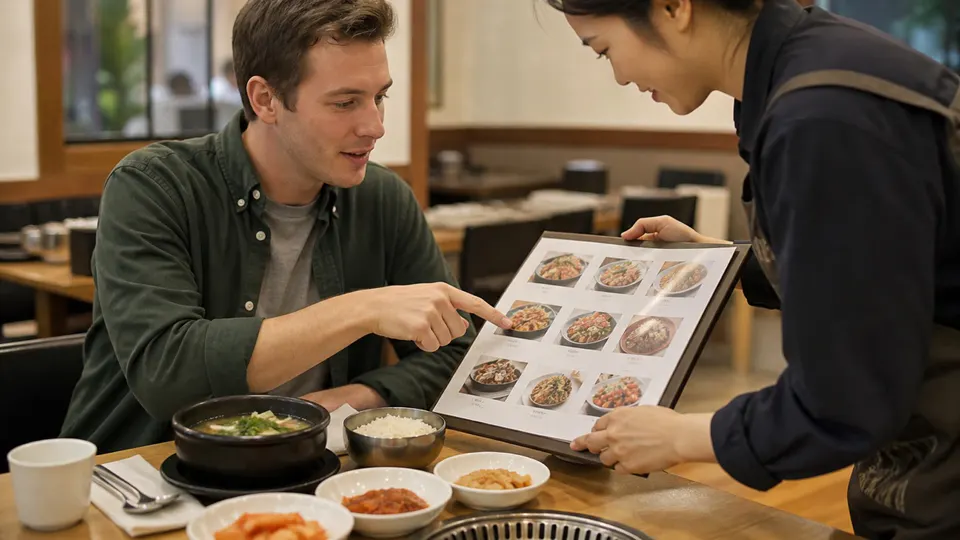
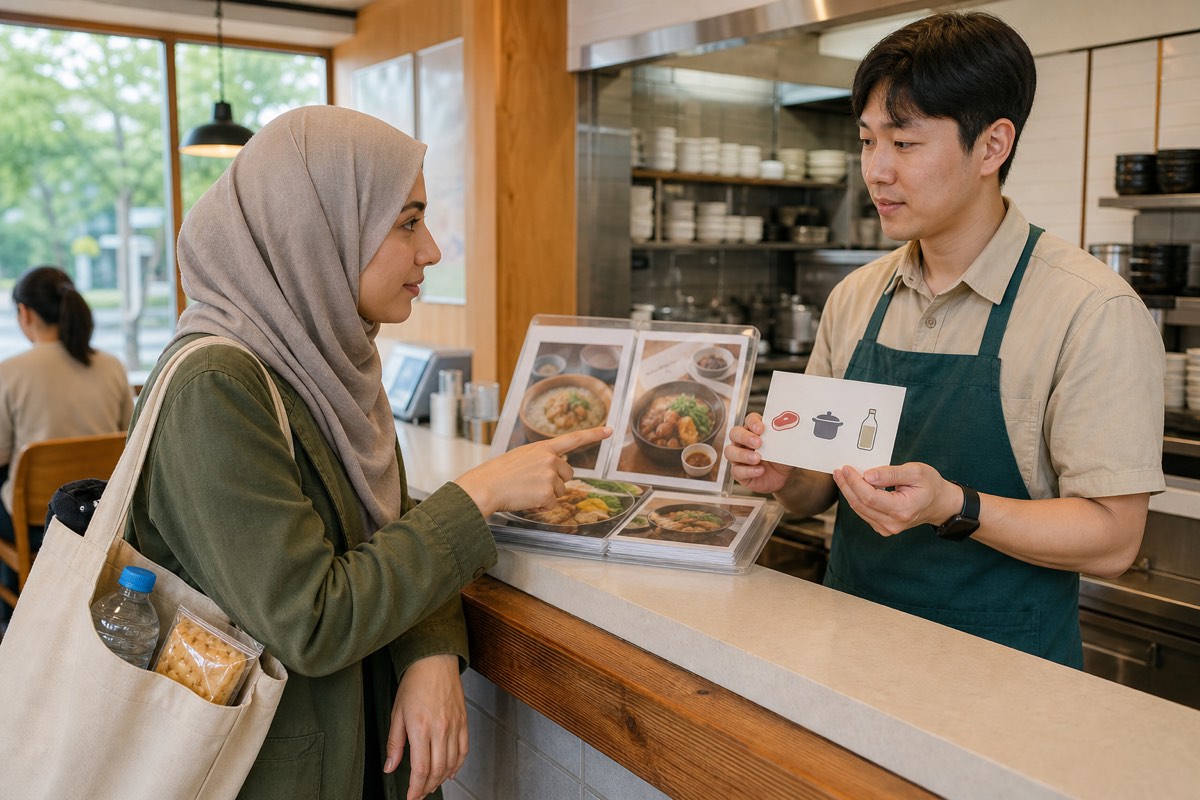
Show one question at a time and point to the exact menu item. Translation helps communication but is not certification. If the answer is uncertain, choose a simpler dish or another restaurant.
Confirm the scope of the claim
Ask whether “halal” describes the entire restaurant, one menu, one meat supplier or only a special order. A certificate near the entrance may cover a product rather than every ingredient in the kitchen. For a reservation-only halal menu, confirm the lead time, minimum order and whether your booking records that request.
When meat is the deciding factor, ask for the exact meat used in the named dish and whether its sauce, stock and garnish follow the same standard. When avoiding alcohol, ask separately about cooking wine, marinades and finishing sauces; “no alcoholic drinks ordered” does not answer whether alcohol is used in preparation.
Verify the exact branch and date
A certification, menu photo or recommendation for one branch should not be transferred automatically to another location with the same brand. Match the Korean branch name, street address and current operator. When contacting the restaurant, state the date and the exact dish because suppliers, recipes and kitchen procedures can change.
Save the reply or current official listing offline, but still ask again if the menu or staff explanation conflicts with it. A certificate image should show who issued it, what it covers and whether it remains current; a logo copied into a social post is not enough.
Use packaged food as a controlled fallback
A sealed product can be easier to assess than an improvised restaurant order, but check the full Korean label and any certification mark on the exact package. Product names and front-of-pack images do not disclose every ingredient or shared manufacturing warning. If a critical term is unclear, use camera translation only to identify the section, then seek reliable confirmation rather than guessing.
For a convenience-store fallback, choose the exact sealed item only after checking its current ingredients and mark. Do not transfer a recommendation from a different flavor, package size or country of manufacture. Keep a small list of products you have personally verified rather than treating an entire brand as equivalent.
Build a resilient meal plan
Save two options near each major stop, not one famous restaurant across town. Confirm opening hours on the day, because afternoon breaks, weekly closures and reservation rules vary. Carry a compact backup such as sealed food that meets your needs. Near prayer time, plan travel and meals separately: a restaurant being Muslim-friendly does not imply it has a prayer room.
Plan the day around realistic options
Group sightseeing stops around dependable meal areas instead of crossing the city for every meal. Mark one primary restaurant, one nearby backup and one sealed-food fallback. Recheck the opening day, break time, reservation requirement and final order time shortly before visiting. Keep prayer-room research separate so neither assumption depends on the other.
Use a stop-or-proceed rule at the door
Proceed when the current branch, category and exact dish match your requirements and staff can answer the remaining ingredient and equipment questions. Pause when only an old social post, generic brand page or unexplained logo supports the claim. Leave when the branch cannot identify the meat, sauce or shared kitchen practice that matters to you. A nearby backup is more useful than debating an uncertain answer during peak service.
Official sources
- VISITKOREA: Muslim-friendly travel and restaurant categories
- Seoul Metropolitan Government: 2026 Seoul tourist guide
Koursea method: official pages establish the classification framework. Koursea adds the visitor decision checklist above. Individual social posts may reveal demand or practical questions, but they are not treated as certification evidence.