
How do you recharge a transit card at a Korean machine?
Select English, place the physical transit card on the reader, choose the amount, and insert an accepted cash note. Keep the card on the reader until the new balance and completion message appear.
| English | Korean | Action |
|---|---|---|
| Language selection | 언어 선택 | Select English before beginning. |
| Recharge transportation card | 교통카드 충전 | Place the physical card on the marked reader. |
| Select amount | 충전 금액 선택 | Choose the displayed amount before inserting cash. |
| Insert cash | 현금을 넣어 주세요 | Use accepted notes and wait for confirmation. |
| Recharge complete | 충전 완료 | Remove the card after the new balance appears. |
Know the common cash gaps
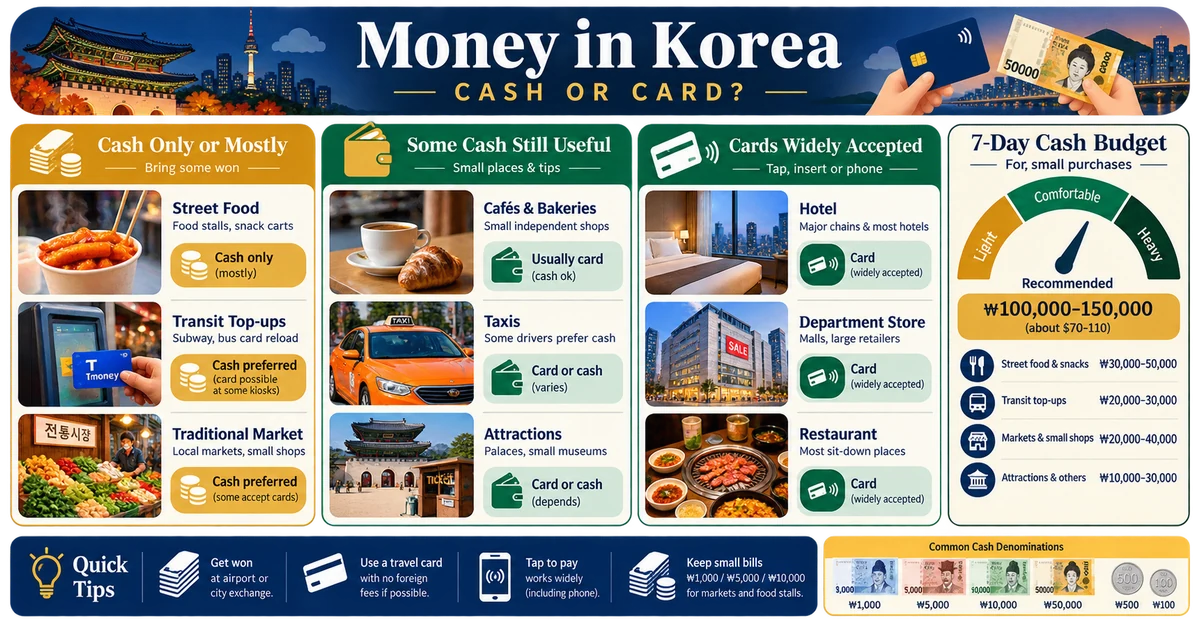
Hotels, department stores, chains and most restaurants accept cards. Cash problems appear more often at temporary street-food stalls, older market vendors, coin lockers or laundries, and transport-card machines or counters that do not accept foreign cards. Acceptance can differ between two stalls on the same street.
Build a small reserve
A solo traveler can begin with enough won for airport-to-city backup, a few transport top-ups, simple meals and one emergency taxi deposit. Keep small ₩1,000 and ₩5,000 notes instead of carrying only ₩50,000 notes. Replenish later at a verified Global ATM or licensed exchange rather than holding the entire trip budget.
Protect cards and cash separately
Carry at least two payment methods and store them apart. Keep only the day’s cash in an accessible wallet. Confirm the amount before handing over notes and collect change immediately. For a vendor using bank transfer only, ask whether cash or card is possible; tourists usually cannot use a Korean account transfer.
Use the budget estimator
Choose days, travelers and cash-heavy activities. The result allocates a reserve rather than predicting total trip spending. Accommodation, shopping and booked attractions normally belong on a card budget. Recalculate if visiting rural areas, markets or festivals where payment infrastructure may be less predictable.
Verification checklist
- Use the official source: check the linked provider again shortly before travel because eligibility, prices and operating rules can change.
- Keep a backup: save confirmations and screenshots offline, and carry a second payment, transport or safety option.
- Stop when uncertain: ask the responsible operator instead of repeatedly retrying a payment, booking or security process.
Official sources
Time-sensitive details were checked against the original sources below on 2026-08-30.