Incheon Airport to Seoul: train, bus or taxi?
The AREX Express one-way fare is approximately KRW 13,000 and the scheduled trip to Seoul Station is about 43–45 minutes. The all-stop train is cheaper but usually takes about 53–60 minutes.
For 2026 budgeting, compare the approximately KRW 13,000 AREX Express fare with the live all-stop fare and your final transfer. Promotional advance-purchase pricing may appear on official channels.
Fast decision table
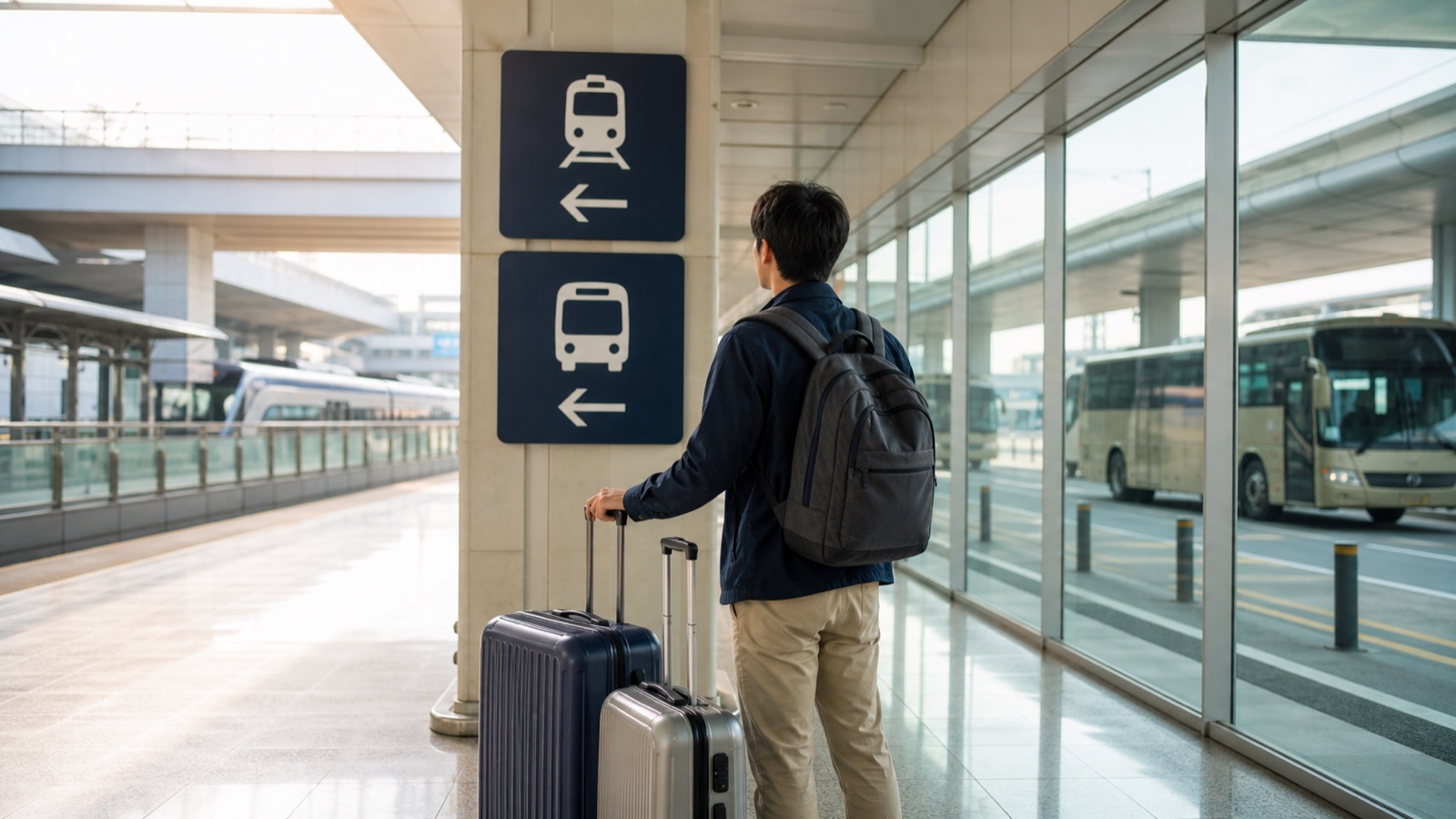
- AREX: predictable rail journey and no road traffic; best when your destination connects cleanly to Seoul Station, Hongik University or the subway.
- Airport bus: fewer stairs and transfers; best when an active route stops near your accommodation.
- Taxi or call van: door-to-door convenience; best when the cost is shared or handling luggage matters more than price.
When the train wins
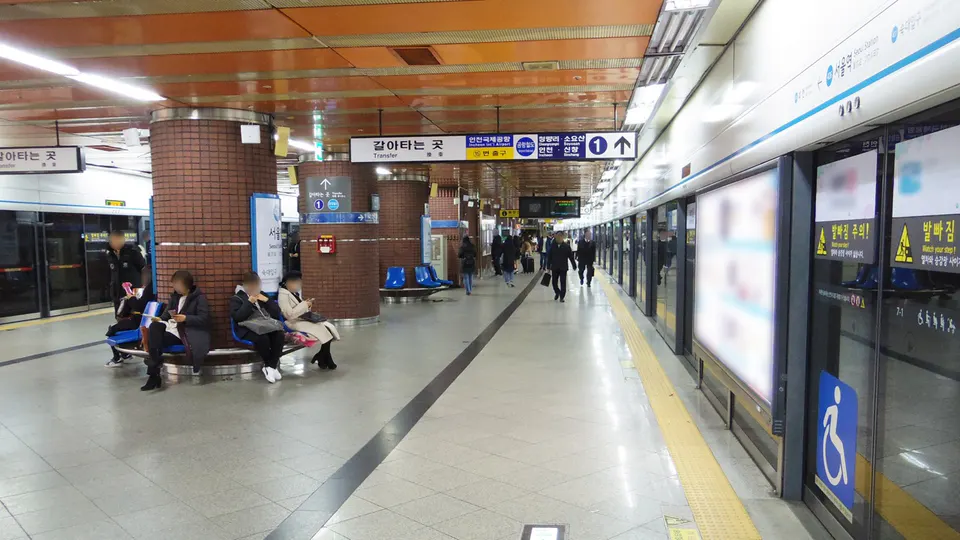
Take the Airport Railroad when traffic risk matters, you arrive during rail operating hours and your hotel is near a useful interchange. Both terminals connect through their Transportation Center. The all-stop train uses unreserved seating and serves intermediate stations; the Express Train uses reserved seating and stops only at Seoul Station, Terminal 1 and Terminal 2. Confirm the live departure and fare with AREX before paying. A fast airport-to-station time can still become a poor trip if you then face two subway transfers, stairs and a long street walk.
Before committing, map the complete route from your arrival terminal to the hotel entrance. Check the last useful connection, elevator locations and whether your suitcase fits comfortably through the route. If you use a Korean transit card for onward travel, keep a payment backup available.
When the airport bus wins
An airport limousine bus can be the lower-effort choice when its stop is close to your hotel. You may avoid carrying luggage through a large interchange. The trade-off is road traffic, route-specific operating hours and a stop that may still be on the opposite side of a wide road.
Use Incheon Airport's official bus search shortly before departure. At Terminal 1, ticket information is available at booths beside exits 4 and 9 inside and near several curbside exits outside. At Terminal 2, use the bus terminal on B1 of the Transportation Center. Match the terminal, route number and stop name rather than relying on an old blog screenshot. Ask your hotel which current stop is easiest and whether a return bus serves the same side of the road.
When a taxi or call van is rational
A taxi is not automatically wasteful. For three or four people, several large bags, a sleeping child, mobility limitations or a late-night arrival, door-to-door travel may prevent an exhausting transfer. Use a designated curbside taxi stand and ignore unsolicited rides inside the terminal. The airport currently lists standard-taxi stands at 5C, 6C and 6D in Terminal 1 and 7C in Terminal 2; verify the signs on arrival because bay assignments can change. Night and boundary surcharges depend on taxi type, time and destination, so confirm that the meter or an official flat fare applies before departure.
Choose by destination shape
Seoul Station and a nearby hotel: rail is the natural first comparison because it removes road congestion from the main leg. It becomes less attractive when the accommodation is still a difficult uphill walk or requires another crowded transfer. Hongdae and western Seoul: compare the all-stop rail connection with the exact airport-bus stop; a direct ride can beat changing through central Seoul. Gangnam and areas south of the river: do not assume that “train is faster” means it is faster to the door. A bus stopping near the property may remove a long cross-city subway connection, while road delay remains the trade-off.
For any neighborhood, open the walking route from the final stop to the entrance and inspect the terrain, crossings and station exit. Two hotels using the same neighborhood name can produce completely different transfer choices. If the property gives an airport-transfer recommendation, confirm that the route number and stop still appear in the airport's current search rather than treating the message as permanent.
What to verify after baggage claim
First confirm the terminal shown on the signs around you; do not follow instructions saved for the other terminal. Then check the official departure board or information counter for the next useful service, not merely the next departure. For a bus, match the route number, destination stop and boarding bay before buying or presenting a ticket. For rail, distinguish the express product from the all-stop service and confirm where you will transfer.
Incheon Airport advises passengers booking public transport to allow for immigration after arrival, so a reservation based only on scheduled landing time is fragile. If a flight delay or long baggage wait removes your planned service, recalculate the entire route. The safest fallback is the next verified public service or the staffed, licensed taxi channel—not a persuasive offer in the arrivals hall.
Calculate the real door-to-door route
Compare four segments: terminal to platform or stop, the main ride, the city transfer and the final walk. Add the number of luggage lifts, stairs and road crossings. A route that looks ten minutes faster in an app can be much slower when it requires changing levels inside a large station.
Save the hotel entrance—not just the neighborhood or station—as the destination. Ask the property which exit has an elevator and whether the airport-bus stop is practical with luggage. For a self-check-in stay, include the time needed to find the correct building and retrieve the key.
Match luggage to the transfer
One traveler with a cabin bag can tolerate a connection that is unreasonable for a family with several suitcases. Keep valuables, medication and travel documents in a small bag that stays with you. Do not block train doors or bus aisles, and follow staff instructions for luggage storage. If an item is left behind, use the Incheon lost-property guide to identify the exact bus, rail, airline or airport custodian.
If a group cannot move every bag safely in one trip, choose a door-to-door option or reduce the transfer count. Splitting the group across vehicles should be planned only when everyone has the address, phone access and a meeting point.
Build a disruption fallback
Save one alternative before landing: a later rail connection, a current airport-bus route or the official taxi stand. If a delay removes the final public-transport connection, avoid improvising with unsolicited drivers. Use airport information staff and licensed transport channels.
For the return journey, recalculate from the departure terminal and required airline check-in time. The route that worked after arrival may not operate early enough for a morning flight.
Arrival checklist
- Confirm whether your flight uses Terminal 1 or Terminal 2.
- Check the complete route to the accommodation entrance.
- Allow time for immigration, baggage and finding the platform or stop.
- Save the hotel name and address in Korean.
- Keep one working payment alternative.
- Recheck live operating information on arrival day.
Incheon Airport to Seoul questions
What is the best way to get from Incheon Airport to Seoul?
There is no single best option for every visitor. Compare the complete route to your accommodation: the AREX train often suits rail-connected destinations, an airport bus may reduce transfers near a suitable stop, and a taxi can be rational for groups, late arrivals, mobility needs or large luggage.
Is there a train from Incheon Airport to Seoul?
Yes. Airport Railroad services connect Incheon Airport with Seoul, but the useful choice depends on your destination and current operating information. Check your terminal, service pattern, transfer station and final walk on the official airport and railroad channels.
How far is Incheon Airport from Seoul?
The useful distance depends on the exact Seoul destination rather than the city name alone. A trip to Hongdae, Seoul Station, Myeongdong, Gangnam or Jamsil has a different road distance, rail connection and door-to-door time. Compare the full route to the accommodation entrance.
Should I take a train, airport bus or taxi with large luggage?
Count passengers, suitcases, strollers and mobility equipment before choosing. A direct bus can avoid rail transfers, while a taxi may be easier when the vehicle capacity is confirmed. Use the large-luggage airport taxi checklist before reserving; do not assume a standard taxi will fit every passenger and bag.
Official sources
- Incheon International Airport: public transportation overview
- Incheon International Airport: Airport Railroad access
- AREX: current passenger terms and train products
- Incheon International Airport: current bus search
- Incheon International Airport: Terminal 2 bus information
- Incheon International Airport: official taxi stands and cautions
- Incheon International Airport official site
Flying home? Continue with the Incheon departure process, including terminal confirmation, airline cutoffs, security and immigration.