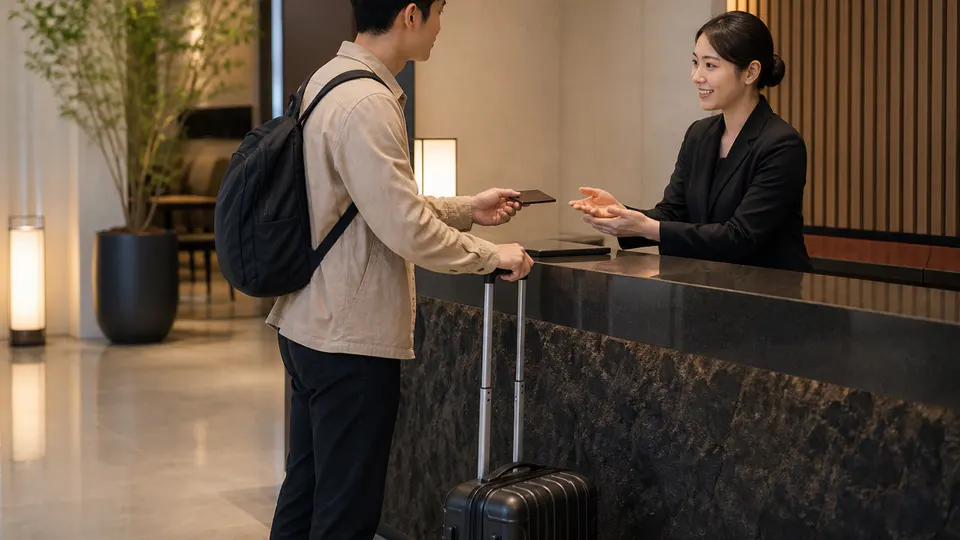
Where to stay in Seoul for a first trip
Quick comparison
| Base | Best when your trip centers on | Tradeoff to check |
|---|---|---|
| Myeongdong / City Hall | A first visit, central sightseeing and shopping | Busy commercial streets; not Seoul's strongest nightlife or residential atmosphere |
| Hongdae | Nightlife, live music, youth culture and west-Seoul plans | Noise changes block by block; late returns still need a current transport plan |
| Jongno / Insadong | Palaces, traditional culture, galleries and tea houses | Inspect the exact building, stairs, elevator and vehicle access |
| Gangnam / Jamsil | COEX, business, shopping, a concert, sports or theme-park day | “Gangnam” is broad; the wrong station can add repeated transfers |
| Seongsu | Repeat visits, cafés, Korean brands, pop-ups and Seoul Forest | Temporary venues change; classic first-trip sights are not the district's strength |
Ask five questions before choosing
- What is your first fixed commitment? A concert, early tour or business meeting should influence the base more than a generic ranking.
- Where will most days end? Reduce repeated evening transfers rather than optimizing for one attraction.
- When do you land? A useful daytime airport connection may not be practical after baggage collection late at night.
- What will you carry? Station elevators, hills, room size and luggage storage matter with large bags, children or reduced mobility.
- Do you want energy or quiet? A lively block can be the trip's best feature or its biggest sleep problem.
Myeongdong: the easiest general-purpose base
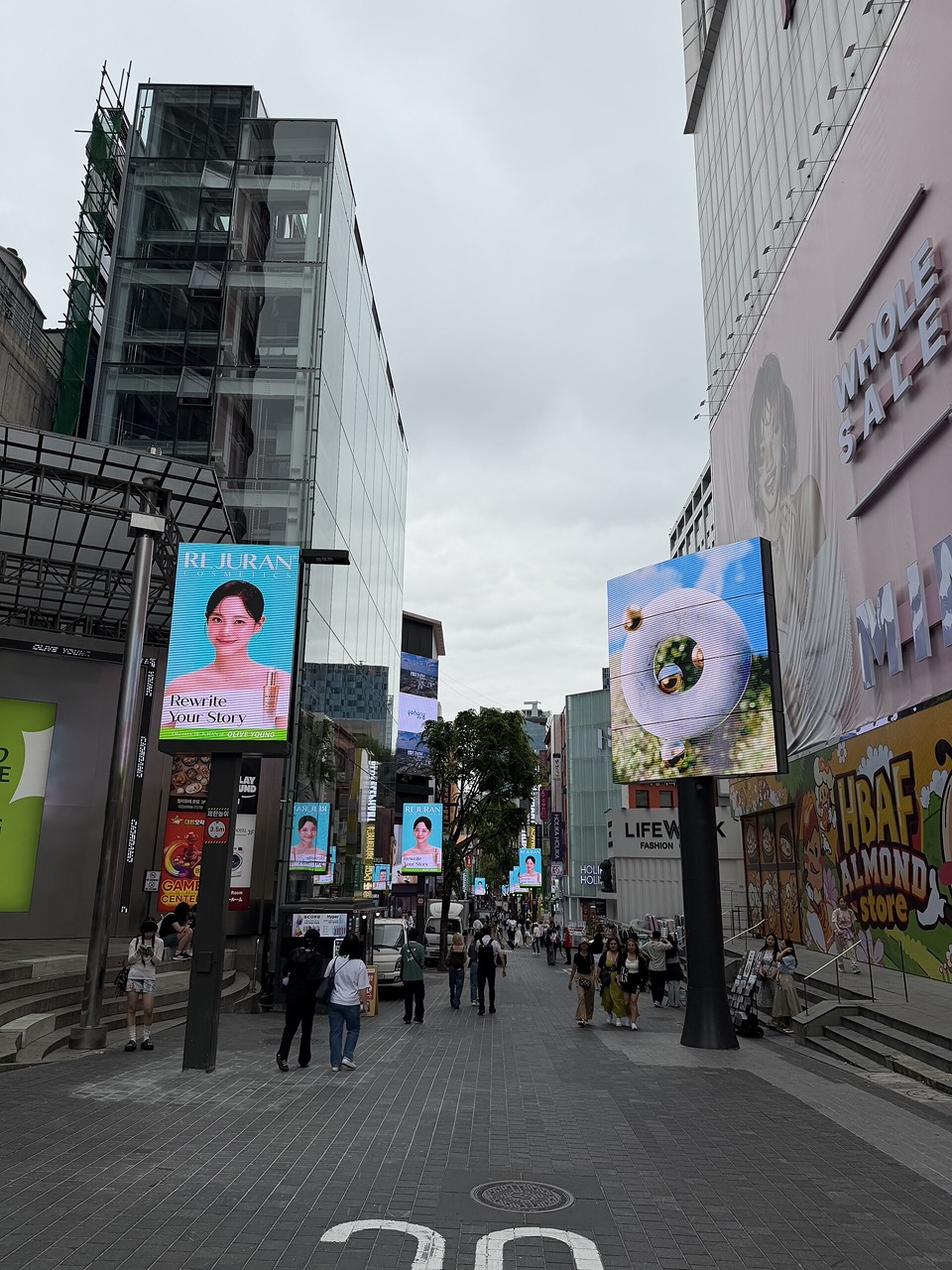
Myeongdong works when you want central geography, dense shopping and many daily choices. Seoul's official tourism guide identifies it as a major shopping and commerce area and lists Myeongdong Station on Line 4 for the main streets. Nearby Euljiro, City Hall and central palace routes also fit many first itineraries.
Check the exact station side. A property marketed as “Myeongdong” may work better from Euljiro 1-ga, Chungmuro or another nearby station. It is less compelling if your priority is late nightlife, quiet residential streets or a strongly local atmosphere. Use the full Myeongdong neighborhood guide before booking every night here.
Hongdae: when evenings and west Seoul matter
Visit Seoul frames Hongdae through pop and indie culture, music, art and the shift from daytime exploring to nighttime activity. That makes it a strong base when the neighborhood itself should remain part of the day after dinner.
The whole Hongdae label is not one atmosphere. Streets beside nightlife clusters can feel very different from quieter accommodation blocks. Check the property's nighttime walking route, room-noise notes, reception policy and current route from your final planned stop.
Jongno and Insadong: for history-first days
Insadong's official tourism page emphasizes traditional culture, galleries, tea houses, crafts and street life. A Jongno or Insadong base can reduce friction when several days include palaces, Bukchon, museums or Gwanghwamun.
Property conditions vary. Older or smaller buildings may have stairs, compact rooms or less obvious vehicle access. Inspect the exact listing rather than assuming every central address is equally accessible.
Gangnam and Jamsil: select the exact node
“Gangnam” is too broad to use as a transport instruction. Gangnam Station, Sinsa/Apgujeong, COEX/Samseong and Express Bus Terminal support different trip patterns. Stay near the node you will actually use.
Jamsil is stronger when the trip is built around Lotte World, Seokchon Lake, the sports complex, a concert or an east-Seoul family day. Visit Seoul's current Jamsil guide highlights the area's parks, lake, major attractions, sports and concert venues. A palace- or west-Seoul-heavy itinerary may still mean repeated cross-city travel.
Seongsu: a deliberate repeat-visitor choice
Seongsu suits visitors prioritizing Korean brands, cafés, changing pop-ups and Seoul Forest. The advantage is immersion in a district that rewards flexible browsing. The caution is the same: temporary events, reservations and opening patterns change, and the area is not one compact attraction.
Use the Seongsu neighborhood guide to decide whether it deserves a half-day or the role of your accommodation base.
Airport arrival should break a close tie
Incheon Airport's official rail guide places airport-rail facilities in the B1 transportation centers at both terminals and directs passengers to the Airport Railroad operator for current fares and schedules. It also lists luggage-service counters at Seoul Station, Hongik University Station and Myeongdong Station. That makes those nodes useful to compare, but it does not promise a one-seat trip to every hotel or service at every hour.
Booking preflight
- Put the exact property—not only the neighborhood—into a Korean mapping app and inspect the exit and final walk.
- Confirm step-free access for the route you will use; a station can have an elevator on the wrong side of a wide road.
- Compare the cancellation deadline in Korea Standard Time and the late check-in policy.
- Check room dimensions, bed arrangement, bathroom layout and space for open luggage.
- Ask whether storage is available before check-in and after check-out; do not assume it is included.
- Read recent comments for construction, nightlife noise, cooling rules and reception hours, then verify decisive facts with the property.
A practical decision rule
For a first trip with no dominant special event, shortlist Myeongdong or another central base and one alternative matching your evenings. Choose Hongdae when nightlife and west Seoul dominate; Jongno/Insadong when historic mornings dominate; Jamsil or a specific Gangnam node when a venue or work schedule dominates. Choose Seongsu because you want Seongsu—not only because it is fashionable.
The winning hotel is usually the one that gives your real itinerary the fewest bad transfers, the clearest arrival and a room you can actually use.